A Song for the Holy Innocents

holy-innocents-rachel-weeping

“Come, daughter
Help me, daughter”
(Source)

While there are still a few minutes left in this feast, let me share with you the perfect music for the day, David Lang’s The Little Match Girl Passion. It is a staggeringly beautiful and tragic piece of music based upon the Hans Christian Andersen fairy tale, The Little Match Girl. It also won its composer the Pulitzer Prize in 2008 and a Grammy in 2010. I encourage you to listen to it in a meditative spirit – slowly, carefully, with the whole soul attentive. You will be richly rewarded.

The Music of the Holy Ghost

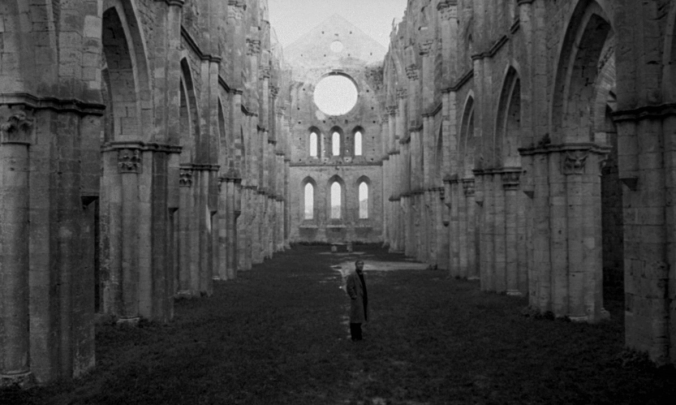
TarkovskyNostalghia.jpg

A still from Andrei Tarkovsky’s Nostalghia (1983). Clips from Tarkovsky’s films are often incorporated into the Rev Army’s music videos. (Source)

Not long ago, I came across a new band. What a singular group it is. Their music crosses and confuses genres. They produce content at a far scarcer rate than other musical acts. Even their name, taken from a Buñuel film, sets them apart from most of the offerings one comes across today.

Little did I know that I had stumbled upon a cult gem. The Revolutionary Army of the Infant Jesus has been on the scene for quite a while. Almost thirty years ago, they released their first album, The Gift of Tears (1987). Since then, they have only come out with sporadic releases, such as 1990’s Mirror and 2015’s Beauty Will Save the World. The long hiatus has well earned them the title of “One of music’s most elusive and enigmatic acts,” as we can read on their BandCamp site.

Tim Cooper has a great review of their work over at The Quietus:

…the attention-averse trio, who regard themselves as a creative collective rather than a band, make wildly eclectic music rooted in liturgical texts and ecclesiastical iconography, contrasting ethereal beauty with stark brutalism. Celestial choirs rub their cassocked shoulders with squalls of industrial noise, political speeches are interwoven with celluloid dialogue, instrumentation ranges from sombre neo-classical piano to pounding dance beats by way of folk, free-form jazz and experimental psychedelia.

They draw together a variety of spiritual and cultural influences: folk Catholicism, peasant mysticism, Russian Orthodoxy, the experience of post-Soviet Europe, Simone Weil, Welsh poetry. Their work can, I think, be described as sophianic, but it is a sophanicity carefully drawn through the harried cracks of the fallen world. The truth that the Rev Army grips and holds up to the light gleams all the more for being refracted in the shards of our earthly mirror.

Here are some favorite songs with their proper music videos, many of which are just as important for the meaning of the piece as the score itself.

Come Holy Spirit” – the very first Rev Army song I discovered. A bit too much flute and too many drums for me, but it was different enough from anything I had ever heard that it caught my attention.

Bright Field” – the first one that captivated me. The upward lift of the music combined with R.S. Thomas’s stirring paraphrase of the Gospel, not to mention Tarkovsky’s silken, dreamlike visuals, all together inspire something like wonder. Whenever I listen to it, I am reminded of a poem by Rilke.

After the End” – a simple and haunting French ditty set to the grainy images of villagers at prayer. They seem to be visionaries.

Psalm” – a few women chant in English against an increasingly dissonant shower of quasi-industrial background noise. The juxtaposition strikes me as an artistic model of transcendence through persistent prayer.

Repentance” – the most Flannery O’Connor thing you will ever see or hear. I’ll just leave it at that.

Théme de l’homme qui n’a pas cru en lui méme” – a Latin-flavored and occasionally jazzy piece featuring footage from a (staged?) Spanish Lenten procession. In case you hadn’t already noticed, the band is extremely Catholic.

Joy of the Cross” – another Lenten procession, but this time with a soft-edged folk music that makes me think of Fleet Foxes.

Before the Ending of the Day” – the Compline hymn surrounded and supported by an airy yet pulsing larger song. Tarkovsky’s Andrei Rublev provides the meditative visuals. Note that one of the commenters on YouTube wrote, “Please keep making more of these. This helped still my soul.”

Something epicletic moves through their music. But one can find that quality in lots of other work. What sets the Rev Army apart isn’t just their obsession with the Holy Ghost, nor their stylistic eclecticism. It’s their powerful sense of mystery. They never shy away from the divine darkness with which the Holy Ghost enshrouds His manifold works of grace. How refreshing, in an age of “Spirit of the Council” muzak and shallow “praise and worship,” to find music that is overtly Christian and even mystical without ever becoming preachy, dated, or emotivist. They treat their subject, the perennial and universal longing of the human heart for God, with a rare artistic and spiritual sophistication.

Caught up in marvel at the saving mystery of the Holy Ghost, the Revolutionary Army of the Infant Jesus is the real Catholic charismatic revival.

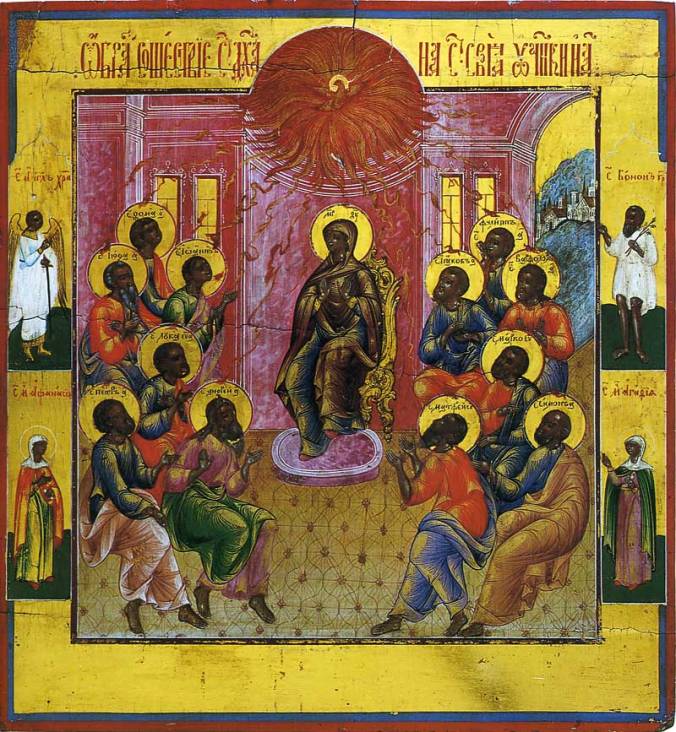
DescentoftheHolySpiritIcon

An icon of the Descent of the Holy Ghost. (Source)

The Lord High Inquisitor’s Song

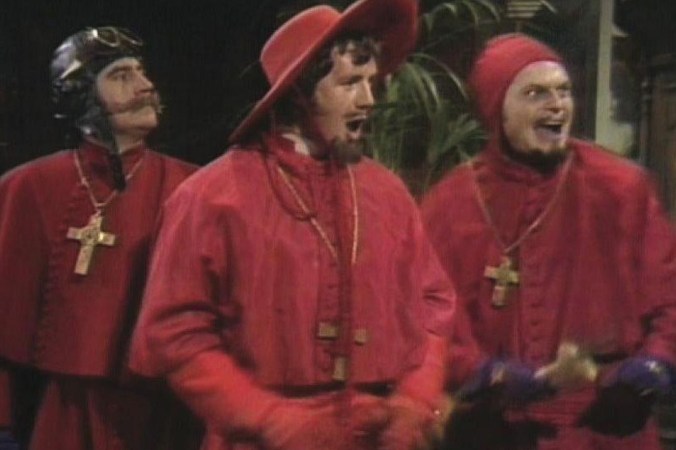
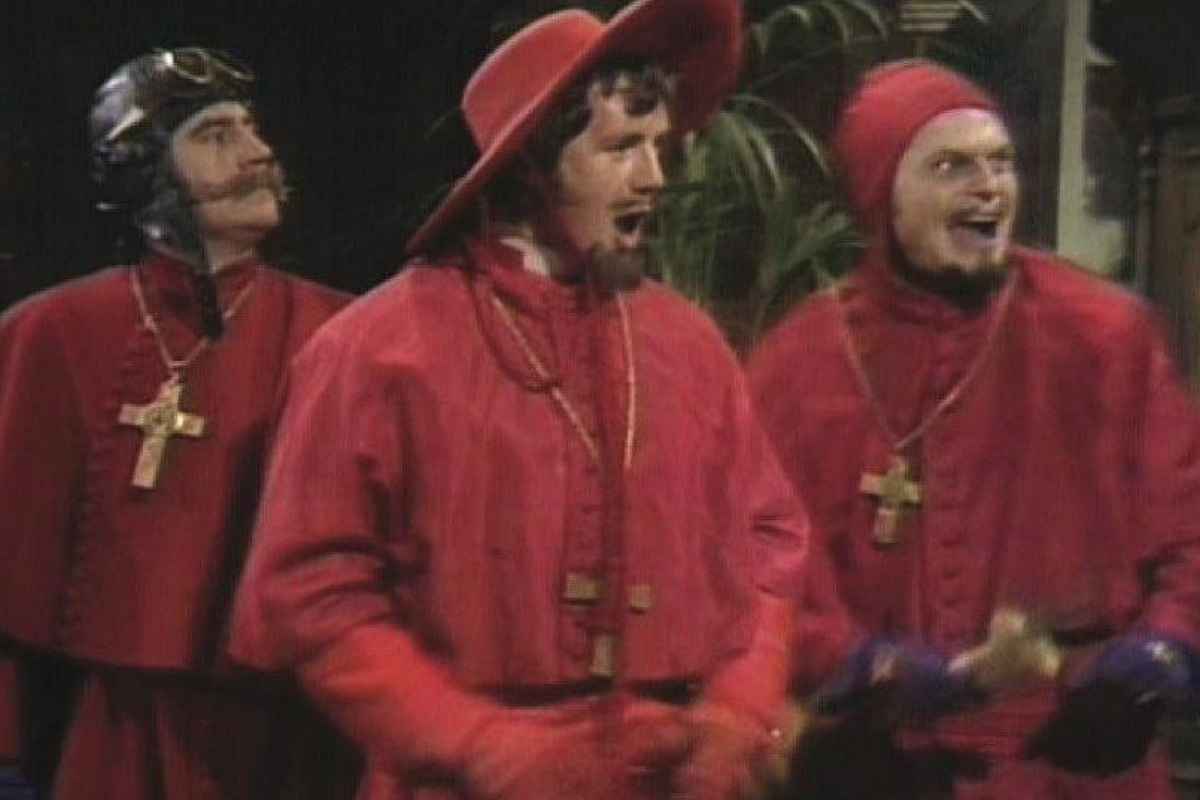
HighInquisitors

Nobody expects it. (Source)

The Lord High Inquisitor’s Song

(tune)

Cardinal Ko-Ko
As some day it may happen that a victim must be found,
I’ve got a little list—I’ve got a little list
Of ecclesial offenders who might well be underground,
And who never would be missed—who never would be missed!
There’s the pestilential journalists who write for NCR,
and all the ultramontanists who think the Pope’s a Czar—
All clergy who wear ugly stoles and vestments as they pray—
And philistines who think that lace is just a little fey—
Theologians from the Argentine who study how to kiss.
They’d none of ’em be missed—they’d none of ’em be missed!

Chorus
He’s got ’em on the list—he’s got ’em on the list;
And they’ll none of ’em be missed—they’ll none of ’em be missed.

Cardinal Ko-Ko
There’s the Jesuit on Twitter who does not believe in hell.
Since God he does resist—I’ve got him on my list!
Then there’s the German Cardinals who pray to Martin L.
They’re just “ecumenist”—they never would be missed!
Then the liberal who praises, with some social justice rage,
The “spiritual but not religious” tenor of the age;
And the parish secretary who makes fruitcake every year
For the congregation’s Christmas Party (and inspires fear);
And that odd phenomenon, theologians feminist
I don’t think they’d be missed—I’m sure they’ll not be missed!

Chorus
He’s got them on the list—he’s got them on the list;
And I don’t think they’ll be missed—I’m sure they’ll not be missed!

Cardinal Ko-Ko
And those mouth-foaming maniacs who write LifeSite clickbait,
Would that they might desist—I’ve got them on the list!
The Neo-Caths at Crisis in a moral panic state.
And a Two-Tiered Thomist—you know he’s on the list!
Then the smug and smarmy statesman who still wears the scarlet hat
Who bows to tyrants’ wishes from a desk chair in the Vat—
And the bishops who decide they want obedience, not truth
All baby boomers who attack the faithful of the youth—
And all the heretics who can be judged quite Modernist.
They’ll none of ’em be missed—they would none of ’em be missed!

Chorus
You may put ’em on the list—you may put ’em on the list;
And they’ll none of ’em be missed—they’ll none of ’em be missed!

Father Faber on the Holy Souls in Purgatory

OLYMPUS DIGITAL CAMERA

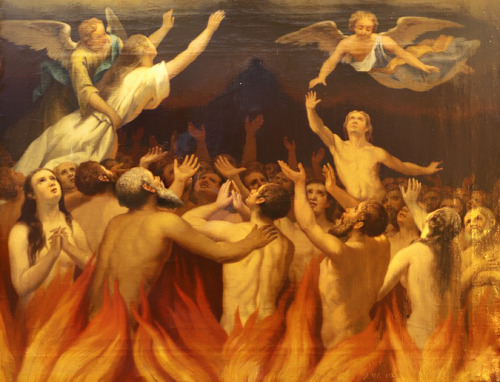
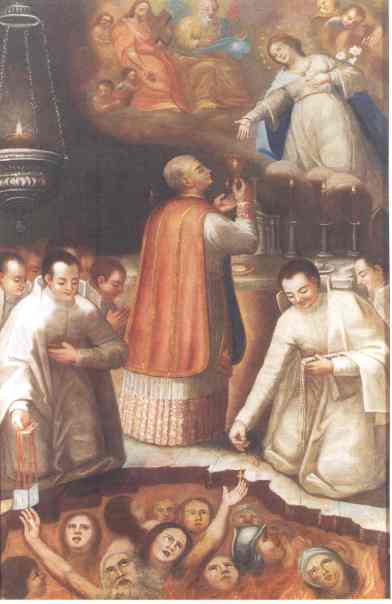
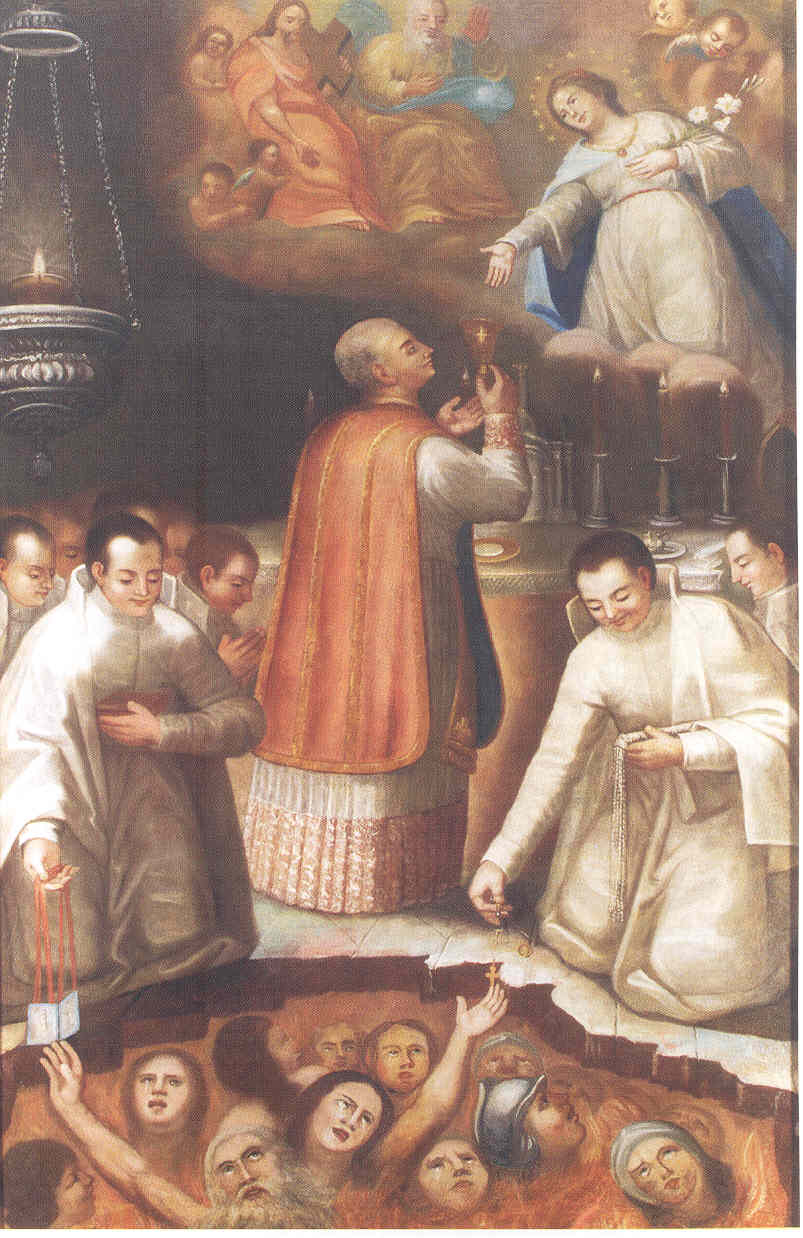
We should always remember to pray for the Holy Souls in Purgatory, especially in this, their month. (Source)

Today is Remembrance Sunday here in the U.K. We had a splendid Solemn High Requiem Mass at the Oxford Oratory, complete with black vestments. The setting was a Requiem by Haydn, which seem to draw us on the journey of a holy soul. From an Introit that sounds like the mournful ghosts of the dead, we proceed to a communion that is full of airy light and calm joy – with a great deal of drama in between. 

I realized that I had not posted anything for All Souls’ Day. Since today is yet another day set aside, at least by British Catholics, for praying on behalf of the dead, I decided I’d post something by that spiritual master, Father Frederick William Faber of the London Oratory. In his own life, Fr. Faber was known for his great devotion to the Holy Souls. One of his more famous texts deals with prayer for those in Purgatory. I have selected the following passage from that work, Fr. Faber’s Purgatory. You can also find it on this website. I offer it here for your consideration and in the hope that the good priest’s words might kindle in us a fonder and more steadfast devotion to the Faithful Departed.

Both views [of Purgatory within Catholicism] agree again in holding that what we in the world call very trivial faults are most severely visited in purgatory. St. Peter Damian gives us many instances of this, and others are collected and quoted by Bellarmine. Slight feelings of self-complacency, trifling inattentions in the recital of the Divine Office, and the like, occur frequently among them. Sister Francesca mentions the case of a girl of fourteen in purgatory, because she was not quite conformed to the will of God in dying so young: and one soul said to her: Ah men little think in the world how dearly they are going to pay here for faults they hardly note there. She even saw souls that were immensely punished only for having been scrupulous in this life; either, I suppose, because there is mostly self-will in scruples, or because they did not lay them down when obedience commanded. Wrong notions about small faults may thus lead us to neglect the dead, or leave off our prayers too soon, as well as lose a lesson for ourselves.

Then, again, both views agree as to the helplessness of the Holy Souls. They lie like the paralytic at the pool. It would seem as if even the coming of the angel were not an effectual blessing to them, unless there be some one of us to help them Some have even thought they cannot pray. Anyhow, they have no means of making themselves heard by us on whose charity they depend. Some writers have said that Our Blessed Lord will not help them without our co-operation; and that Our Blessed Lady cannot help them, except in indirect ways, because she is no longer able to make satisfaction; though I never like to hear anything our dearest mother cannot do; and I regard such statements with suspicion. Whatever may come of these opinions, they at least illustrate the strong way in which theologians apprehend the helplessness of the Holy Souls. Then another feature in their helplessness is the forgetfulness of the living, or the cruel flattery of relations who will always have it that those near or dear to them die the deaths of Saints. They would surely have a scruple, if they knew of how many Masses and prayers they rob the souls, by the selfish exaggeration of their goodness. I call it selfish, for it is nothing more than a miserable device to console themselves in their sorrow. The very state of the Holy Souls is one of the most unbounded helplessness. They cannot do penance; they cannot merit; they cannot satisfy; they cannot gain indulgences; they have no Sacraments; they are not under the jurisdiction of God’s Vicar, overflowing with the plentitude of means of grace and manifold benedictions. They are a portion of the Church without either priesthood or altar at their own command.

holy-souls._jpg

Pray for the Holy Souls in Purgatory. (Source)

Those are the points common to both views of purgatory; and how manifold are the lessons we learn from them, on our own behalf as well as on behalf of the Holy Souls. For ourselves, what light does all this throw on slovenliness, lukewarmness, and love of ease? What does it make us think of performing our devotions out of a mere spirit of formality, or a trick of habit? What diligence in our examens, confessions, Communions, and prayers! It seems as if the grace of all graces for which we should ever be importuning our dear Lord, would be to hate sin with something of the hatred wherewith He hated it in the garden of Gethsemane. Oh, is not the purity of God something awful, unspeakable, adorable? He, who is Himself a simple act, has gone on acting, multiplying acts since creation, yet he has incurred no stain! He is ever mingling with a most unutterable condescension with what is beneath Him-yet no stain! He loves His creatures with a love immeasurably more intense than the wildest passion of earth- yet no stain! He is omnipotent, yet it is beyond the limits of His power to receive a stain. He is so pure that the very vision of Him causes eternal purity and blessedness. Mary’s purity is but a fair thin shadow of it, and yet we, even we, are to dwell in His arms for ever, we are to dwell amid the everlasting burnings of that uncreated purity! Yet, let us look at our lives; let us trace our hearts faithfully through but one day, and see of what mixed intentions, human respects, self-love, and pusillanimous temper our actions, nay, even our devotions, are made up of; and does not purgatory, heated seven-fold and endured to the day of doom, seem but a gentle novitiate for the Vision of the All-holy?

St.-Michael-the-Archangel-and-the-Souls-in-Purgatory

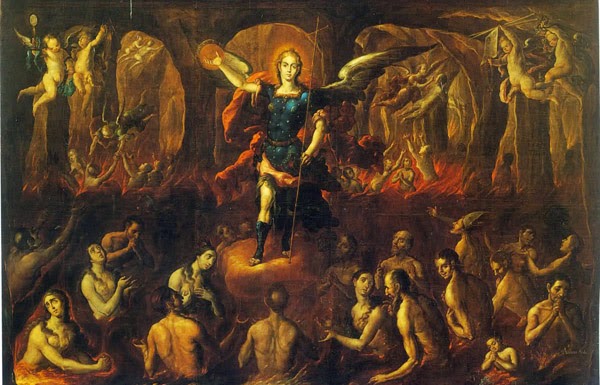
St. Michael the Archangel has traditionally been closely associated with the Holy Souls of Purgatory in the Church’s devotional life. (Source)

But some persons turn in anger from the thought of purgatory, as if it were not to be endured, that after trying all our lives long to serve God, we should accomplish the tremendous feat of a good death, only to pass from the agonies of the death-bed into fire, long, keen, searching, triumphant, incomparable fire. Alas! my dear friends, your anger will not help you nor alter facts. But have you thought sufficiently about God? Have you tried to realise His holiness and purity in assiduous meditation? Is there a real divorce between you and the world which youknow is God’s enemy? Do you take God’s side? Are you devoted to His interests? Do you long for His glory? Have you put sin alongside of our dear Saviours’ Passion, and measured the one by the other? Surely, if you had, purgatory would but seem to you the last, unexpected, and inexpressibly tender invention of an obstinate love, which was mercifully determined to save you in spite of yourself. It would be a perpetual wonder to you, a joyous wonder, fresh every morning, a wonder that would be meat and drink to your soul, that you, being what you know yourself to be, what God knows you to be, should be saved eternally. Remember what the suffering soul said so simply, yet with such force, to Sister Francesca: ‘ Ah! those on that side of the grave little reckonhow dearly they will pay on this side for the lives they live! To be angry because you are told you will go to purgatory! Silly, silly people Most likely it is a great false flattery, and that you will never be good enough to go there at all. Why, positively, you do not recognise your own good fortune, when you are told of it. And none but the humble go there. I remember Maria Crocifissa was told that although many of the Saints while on earth loved God more than some do even in heaven, yet that the greatest Saint on earth was not so humble as are the souls in purgatory. I do not think I ever read anything in the lives of the Saints which struck me so much as that. You see it is not well to be angry; for those only are lucky enough to get into purgatory who sincerely believe themselves to be worthy of hell.

Purgatory_Mass._jpg

Masses and indulgences can be tremendously helpful to the souls suffering in Purgatory. (Source)

But we not only learn lessons for our own good, but for the good of the Holy Souls. We see that our charitable attention towards them must be far more vigorous and persevering than they have been; for men go to purgatory for very little matters, and remain there an unexpectedly long time. But their most touching appeal to us lies in their helplessness; and our dear Lord, with His usual loving arrangement, has made the extent of our power to help them more than commensurate with their ability to help themselves. Some theologians have said that prayer for the Holy Souls is not infallibly answered. I confess their arguments on this head do not convince me; but, conceding the point, how wonderful still is the power which we can exercise in favour of the departed! St. Thomas has at least taught us that prayer for the dead is more readily accepted with God than prayer for the living. We can offer and apply for them all the satisfactions of Our Blessed Lord. We can do vicarious penance for them. We can give to them all the satisfactions of our ordinary actions, and of our sufferings. We can make over to them, by way of suffrage, the indulgences we gain, provided the Church has made them applicable to the dead. We can limit and direct to them, or any one of them, the intention of the Adorable Sacrifice. The Church, which has no jurisdiction over them, can yet make indulgences applicable or inapplicable to them by way of suffrage; and by means of liturgy, commemoration, incense, holy water, and the like, can reach efficaciously to them, and most of all by her device of privileged altars. The Communion of Saints furnishes the veins and channels by which all these things reach them in Christ. Heaven itself condescends to act upon them through earth. Their Queen helps them by setting us to work for them, and the Angels and the Saints bestow their gifts through us, whom they persuade to be their almoners; nay, we are often their almoners without knowing that we are so. Our Blessed Lord vouchsafes to look to us, as if He would say: Here are my weapons, work for me! just as a father will let his child do a portion of his work, in spite of the risk he runs in having it spoiled. To possess such powers, and not to use them, would be the height of irreverence towards God, as well as of want of charity to men. There is nothing so irreverent, because nothing so unfilial, as to shrink from God’s gifts simply because of their exhuberance. Men have a feeling of safety in not meddling with the supernatural; but the truth is, we cannot stand aloof on one side and be safe. Naturalism is the unsafe thing. If we do not enter the system, and humbly take our place in it, it will draw us in, only to tear us to pieces when it has done so. The dread of the supernatural is the unsafest of feelings. The jealousy of it is a prophecy of eternal loss.

It is not saying too much to call devotion to the Holy Souls a kind of centre in which all Catholic devotions meet, and which satisfies more than any other single devotion our duties in that way; because it is a devotion all of love, and of disinterested love. If we cast an eye over the chief Catholic devotion, we shall see the truth of this. Take the devotion of St. Ignatius to the glory of God. This, if we may dare to use such an expression of Him, was the special and favourite devotion of Jesus. Now, purgatory is simply a field white for the harvest of God’s glory. Not a prayer can be said for the Holy Souls, but God is at once glorified, both by the faith and the charity of the mere prayer.

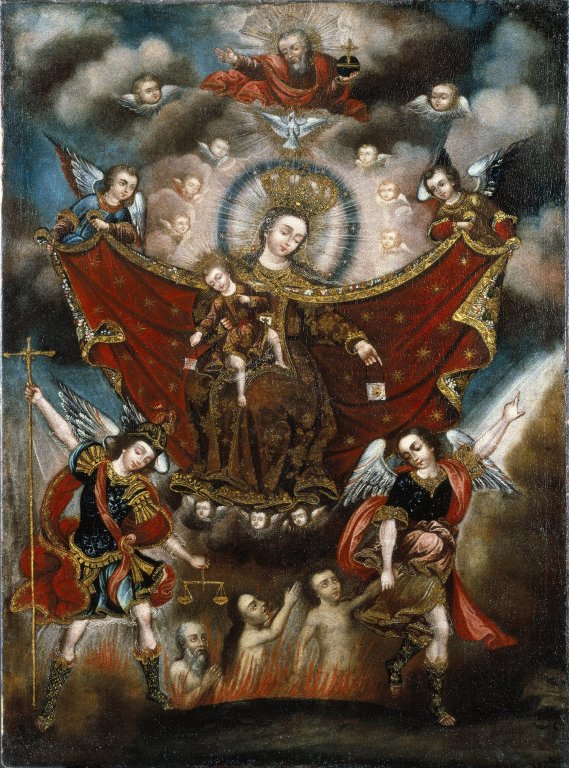
Brooklyn_Museum_-_Virgin_of_Carmel_Saving_Souls_in_Purgatory_-_Circle_of_Diego_Quispe_Tito_-_overall

The Virgin of Carmel Saving Souls in Purgatory, Circle of Diego Quispe Tito, c. 17th century. Brooklyn Museum. (Source)

My Favorite Scary Movies

Lloyd

What’ll ya have? (Source)

It’s nearly the Eve of All Hallows, and that means it’s time for some spooky stuff. I thought I’d offer up my top 10 favorite horror films for your viewing enjoyment.

I’ll begin with a few honorable mentions, including horror comedies. In no particular order: Sweeney Todd (2007), Halloween (1978), The Rocky Horror Picture Show (1975), The Exorcist (1973), Dracula: Dead and Loving It (1995), What We Do in the Shadows (2014), The Silence of the Lambs (1991), Young Frankenstein (1974), The Others (2001), and Shaun of the Dead (2004). All of these are pretty good films on their own terms, and you should watch them. But for the following list, I wanted to highlight a few I though were especially worth re-viewing this Halloween.

I generally dislike slashers and body horrors, so you won’t see any of the Saw, Grudge, Hostel, Alien, or Ring series here. My tastes run towards the Gothic, psychological, occult, Lovecraftian, and atmospheric. My list reflects that tendency. I don’t claim it will satisfy everyone. Finally, while I have generally tried to avoid SPOILERS, I think I may have left one or two. So abandon all hope, ye who enter here.

10. Jack Frost (1997)

jack-frost-1997-snowman-attack

When he kills this guy, he says, “I only axed ya for a smoke.” And chuckles. Really. (Source)

Admittedly, this is a very bad film. It holds a whopping 7% on Rotten Tomatoes, and I’ve never been able to get through the whole thing myself. But what I have seen makes me esteem Jack Frost as one of the corniest and campiest of horror B-movies. And I adore B-movies, so this one’s gonna stand in for all the crap I could have chosen instead.

The plot is pretty straightforward. A psychopathic serial killer is being transported to death row when his car gets in an accident with a massive container truck full of a biological reagent. He is burned by the acid and seemingly melts away. However, his DNA fuses with the snow and takes on a new form as a Killer Mutant Snowman, hell-bent on terrorizing the community that sentenced him. Hilarity ensues. Complete with over-the-top gore, the very cheapest of special effects, completely maladroit music, a ridiculous sex scene, some of the worst acting you will ever watch, and dad-level one-liners (no, but really), this Christmas-themed whopper of a flop will liven up your Halloween.

9. Les Yeux Sans Visage (1960)

yeux-sans-visage2_0

Les Yeux Sans Visage – a classic of French horror, with profound Feminist undertones. (Source)

Now on to something actually creepy. This French horror film by Georges Franju is not overly scary, in the sense that it lacks jump scares or the typical fare of, say, slashers or sex-crazed body horrors. But it’s definitely worth seeing, as at times it actually becomes a poignant exploration of power and acceptance. Also, it inspired an eponymous song by Billy Idol.

A mad scientist and his cohort of minions murder young girls in Paris so that he can steal their faces – literally. His daughter Christiane suffers from a terrible facial disfigurement after a motorcycle accident for which he was responsible, and in his guilt, he promises he will graft a new face onto her. Every attempt is unsuccessful. Christiane wanders the halls in an eerie white mask, and we are treated to a gruesome, close-up view of a face transplant. Ultimately, the story examines how men use female bodies as canvasses to represent and expiate their own guilt, especially for violence they have committed against women. It also examines the complicity of other women – the mad doctor’s closest assistant is a lady whom he successful healed after her own scarring accident.

A sensitive, beautiful, and tragic tale with a few disturbing scenes. Worth your time.

8. Repulsion (1965)

repulsion-hallway-copy

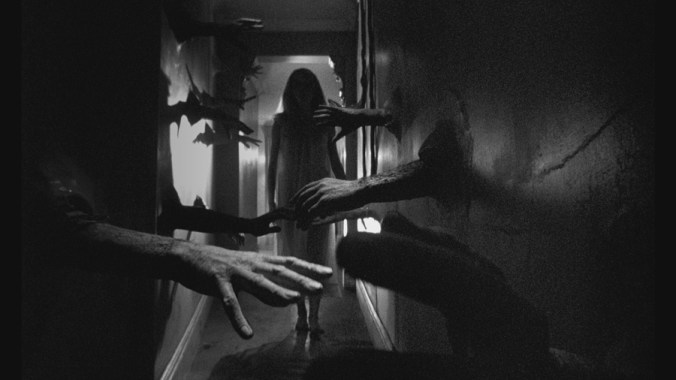
The famous hallway of hands sequence in Repulsion. (Source)

One of Roman Polanski’s early greats, Repulsion remains a standard of Psychological Thrillers. It features some of Polanski’s classic sequences and shots: the buskers, the hallway of hands, the decomposing rabbit. The film follows the mental breakdown of a young girl (played by a youthful Catherine Deneuve) on a weekend she spends alone in her apartment in Belgium. That may sound simple, but boy is there a lot going on. Sex, murder, insanity – not to mention painfully tight close-ups in an era when that was considered artistic. Repulsion is definitely one of the strangest and most harrowing films on this list.

7. Jaws (1975)

Jaws

Duh dum. Duh dum. (Source)

One of the greatest and most popular horror films ever made. Its instantly recognizable theme is one of the few horror scores to rise to the status of auditory icon. I would argue that it’s Steven Spielberg’s finest and scariest foray into the genre, much better than his trope-heavy Poltergeist (1982). The simplicity of Jaws is what makes it so effective as a nail-biter. There’s a murderous shark, and to hunt it, you have to become ever more isolated – and thus ever more vulnerable.

There are plenty of genuinely scary moments in the film, but I think one of the best is also one of the most understated: the tale of the USS Indianapolis. Here, too, the black magic is all in the simplicity. Quint tells a story. That’s it. But it’s one of the most disturbing stories ever told in a film (and what’s worse, it’s true). While all the cast give fantastic performances, Robert Shaw exceeds his peers by that one scene.

6. Psycho (1960)

psycho-3

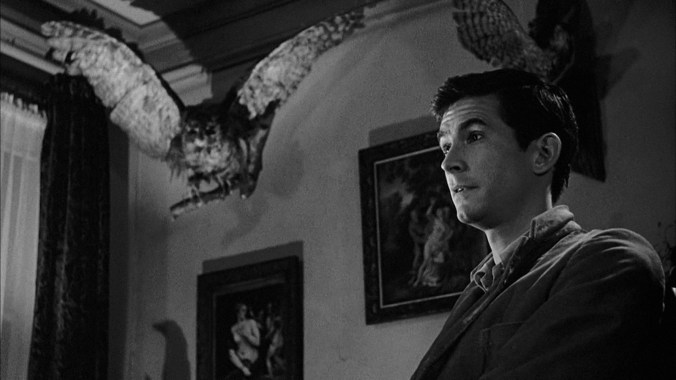
“We all go a little mad sometimes…” (Source)

I probably could have chosen several of Hitchcock’s films for this list. Some of his thrillers are remarkably good. Particular favorites include Strangers on a Train (1951), Vertigo (1958), and Rope (1948). But as far as frights go, nothing in the prolific director’s oeuvre surpasses his horrific masterpiece, Psycho. Long before M. Nigh Shyamalan attempted (and subsequently wrecked) the art of the twist ending, Psycho showed generations of directors how it was done. Ans like Jaws, Psycho gave us an iconic score, forever associated with an iconic scene.

Psycho was among the first real horror films I saw, one Halloween night many years ago. I’ve loved it ever since.

5. Eraserhead (1977)

Eraserhead

The woeful Henry Spencer in David Lynch’s first movie, Eraserhead (Source).

David Lynch is one of my favorite directors (I sometimes joke that Twin Peaks is my “second religion”). His first film, Eraserhead, has an affinity with the New Wave horror of Polanski et al. As in Repulsion, we are constantly made to feel the limits of the space the characters inhabit. But Claustrophobia is only one of the fears that Lynch explores. Eraserhead is a great meditation on the terrors that attend some of the most common experiences of life: work, sex, marriage, fatherhood. Jack Nance’s performance as Henry Spencer is riveting as it is tense, and the eerie Lady in the Radiator sequences foreshadow much of what Lynch would later use in his more famous works like Twin Peaks and Mulholland Drive. The film also probably wins the award for creepiest baby in cinematic history; even today, Lynch won’t reveal how they made it. If you like surrealism, body horror, or pencils, I recommend this classic for your consideration.

4. The Innocents (1961)

theinnocents

Deborah Kerr gives a masterful performance in this classic Gothic horror. (Source).

If you like your horror set in creepy old English manor homes, full of candlelight and the creak of ghosts on the stairs, then you’ll certainly love The Innocents. Based on Henry James’s classic novella, The Turn of the Screw, the film follows a governess, played by Deborah Kerr, who is sent to care for two orphans in the English countryside. As time passes, she starts to believe that the children are under the malign influence of ghosts. Is she insane? Or is she battling the forces of the supernatural?

While viewers still debate the meaning of the deeply ambivalent ending, one thing’s for certain; this film is a masterful example of mid-century Gothic horror. Not to be missed.

3. The Wicker Man (1973)

lord-summerisle-the-wicker-man2

Traditional British Values. (Source)

The Wicker Man, strictly speaking, really isn’t all that scary. But it is a very good story all the same, and Christopher Lee puts in a marvelous performance as Lord Summerisle. If you like folk-horror, a subgenre the English do better than anyone, you’ll enjoy this creepy little romp through a murderous, pagan island in Scotland. Arthur Machen would have loved it.

I find it somewhat amusing that Lee, a devout Anglo-Catholic, thought that the film was ultimately a Christian one in suggesting that even nice people can commit horrible acts if they are not within the fold of the Church. Maybe. But what a poor argument for Christianity it is! The protagonist is such an unlikable and censorious prude, and the villagers are such fun-loving heathens, that you end up not caring too much about the Christian policeman’s fate in the final showdown. Alas. I suppose I’m biased, though, as I’ve long thought that Catholics are just baptized pagans anyway. Incidentally, I think the community of Summerisle gives a pretty good picture of what the Benedict Option might look like in practice.

Don’t confuse this classic with the highly memeable 2006 sequel starring the one and only Nicolas Cage. There are creepy masks, but no full-on bear suits in Christopher Lee’s version. And definitely no bees.

2. The Shining (1980)

the-shining-HD-Wallpapers

“Come play with us, Danny.” (Source)

Stanley Kubrick’s horror masterpiece. Considered in purely artistic terms, there are no better films on this list. It shows what kind of art can happen when a genius director works with a genius actor (Jack Nicholson in one of the best performances of his career). More to our point – the frights are just as potent today as they were in 1980. Unlike a number of other works from the same decade, The Shining has retained its creepiness. It terrified and disturbed me the first time I saw it, and while I mainly pay attention to its formal and aesthetic qualities now, I still jump now and then when I watch it. I will never not find that man in the dog/bear suit (you know the one) absolutely terrifying, and I will never not relish the conversations with Lloyd and Grady with a certain perverse glee.

I could probably go on and on about how great this film is. But why bother? Just watch it yourself. You won’t be disappointed.

1. The VVitch

WitchWoods

“What went we out into these woods to find?” (Source)

Horror has gotten much better lately, with genuinely artistic offerings from bold new directors. The Babadook (2014), Goodnight Mommy (2014), It Follows (2014), The Blackcoat’s Daughter (2015), The Eyes of My Mother (2016), It Comes at Night (2017), and Get Out (2017), among others, have all renewed the genre. But my favorite among the new horror is The Witch (2016). Genuinely creepy, trope-laden without being clichéd, atmospheric, Gothic, full of painstakingly reproduced sets and costumes from Puritan New England, and written entirely in 17th century English, The Witch represents an enthusiastic return to the old legends of Early Modern witchcraft. And it is beautifully shot. At times, it looks like the film that Goya would produce if he lived in our time. There is a black goat. It will change the way you look at the animals. In short, it is a cinematic triumph for A24, a studio that has proven itself to be one of the leaders of the new horror.

I love The Witch for all those reasons – but also because it presents a world in which Christianity is taken seriously. That rather startling quality has been in short supply among horror films since Terrence Fisher’s Hammer flicks of the 1960’s and 70’s. We see these characters as real, dignified people afflicted by indisputably real forces of the supernatural. In the world of The Witch, the Devil is real and so are his servants.

The film can also be read as a profound meditation on the doctrine of original sin. The ruin of the whole family follows from the pride of the father as we see it at the movie’s start. They are effectively damned as soon as they leave the village. There is perhaps some irony in the fact that the Church of Satan both endorsed and promoted the film. It is the only really Calvinist movie I’ve ever seen; no other has so deftly and deeply explored the Reformed idea of reprobation.

Halloween is naturally a time to seek out a good scare. If you’re looking to do that with a movie, I can think of no better option than The Witch. But you’ll get more than that. The Witch immerses us in a world we can hardly fathom, a world where supernatural evil lurks just behind the treeline and in the pale light of an attic. Dipping into that world can be salutary. After all, maybe it’s a good idea on the Eve of All Hallows – the night before the feasts of the Saints in Heaven and the Holy Souls in Purgatory – to spend some time first meditating on the damned.


The Prince of Papist Purple Prose

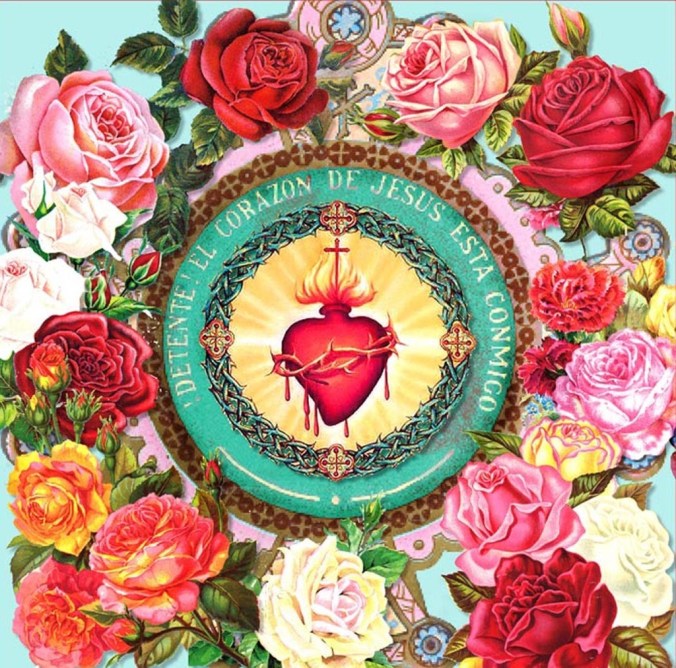
SacredHeartRoses

Faberesque religious art. (Source)

The Church offers us the way of salvation. She declares the destination, Heaven; she notes our provenance, the bondage of our sinful nature. And she furnishes a route from the latter up to the former. Or, I might say, “routes.” For while the Cruciform road to Heaven may appear singular from afar, anyone who enters the Journey will find that it is in fact composed of many different paths. The holy diversity of the Church is one testament of its Catholicity. Like a great Cathedral or Basilica that appears as one massive edifice from the street but harbors dozens of little side-altars within, each distinctly the Table of the Lord, the Church offers more streams of spirituality than we can discern. Some flow still in our midst, giving life to multitudes. Others run dry. And some thought long-extinct may suddenly spring forth in new vim and vigor.

It is only a natural and concurrent fact that the Church should likewise offer her children a diverse array of spiritual writers. There is the beautiful, mysterious Areopagite; the mighty, noble St. Augustine; the dazzlingly imaginative St. Ephrem the Syrian; the logical, pacific Aquinas; the bloody consolations of Dame Julian; the gleaming shadows of St. John of the Cross; the brooding brilliance of Pascal; the soaring eloquence of Bossuet; the roseate cheer of St. Thérèse of Lisieux; the luminous fragmentation of T.S. Eliot; the Gothic grotesquerie of Flannery O’Connor.  The list goes on and on.

The English Catholic Revival was a fertile time for spiritual writers. At the fountainhead of the entire movement stands Cardinal Newman, whose massive influence is still being felt by theologians and writers today. The founder of the English Oratory was a masterful stylist, so much so that James Joyce considered him the greatest master of English prose. Every ecclesiastical development proves that Newman’s theology is more timely than ever. He has been lauded by subsequent generations, and rightly so. When he is eventually canonized, he will certainly be declared a Doctor of the Church for his labors.

But he has, sadly, overshadowed another figure, one no less deserving of praise for his own work on behalf of the Gospel. That man is Fr. Frederick William Faber, the founder of the London Oratory.
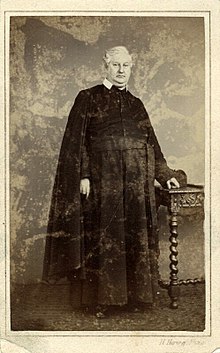
Faber1860

Fr. Frederick William Faber, Father of the Brompton Oratory. (Source)

Faber was an Oxford convert like Newman. After leaving the University, he first served as an Anglican parish priest in Northamptonshire. He would later bring eleven men with him across the Tiber when he resigned his post. After shepherding the community for a short time, he eventually joined forces with Newman and co-founded the English Oratory. They split the country. Newman went to Birmingham, and Faber went to London. In the course of his time there, he gained notoriety as a preacher of remarkable versatility and power, a widely-respected hymnodist, a constant friend of the poor, and an authoritative teacher of the spiritual life. As one source has it, his written works

…are a mine of spiritual gold of the highest purity, refined and drawn from Faber’s deep understanding of Catholic spiritual theology. For he had delved deeply, not only into the standard Scholastic philosophy and theology, but especially into the mystical schools. Father Faber was a brilliant man whose theology of the Absolute Primacy of Christ and Mary is grounded in that of the Subtle Doctor, Blessed John Duns Scotus (1266-1308), all recast in simple ordinary English. (174).

When he died, all the great Catholics of England honored his memory. In France, even the formidable abbot of Solesmes, Dom Prosper Guéranger, admired his writings and wrote of him fondly.

But Faber is a largely forgotten figure today, at least among American Catholics. While most have probably heard at least one or two of his hymns, such as “Faith of Our Fathers,” few read more deeply into his life or thought. Why? What has caused this lacuna in our collective memory?

There are, I think, two primary reasons.

The first is that he is eclipsed by Newman. The two had differences in their own day. Newman was resolutely opposed to the pretensions of Ultramonatism; Faber, like Cardinal Manning, was a strong advocate of Rome’s prerogatives. Newman always wanted to return to Oxford and restore some traces of his old, academic life; Faber was content to build the finest church of Great Britain in London, to better minister to the poor. Newman was always a little wary about Marian titles and devotions; Faber practically bathed in them. As Monsignor Rondald Knox writes in 1945,

While Faber is introducing the British public to the most luscious legends of the Counter-Reformation, Newman is still concerned over the difficulties of Anglicans, still asking how and in what sense Catholic doctrine has developed, still cautiously delimiting the spheres of faith and reason. (“The Conversions of Newman and Faber,” Pastoral and Occasional Sermons, 875).

The tensions surrounding Faber’s spirituality eventually led Newman to formally, judicially separate the two houses. Sadly, “While Newman visited Faber shortly before his death, the two men were not able to fully resolve their differences.”

The second, related to the first, is part stylistic, part spiritual. Consider an analogy. Among the Metaphysical Poets, the meditative Donne has always outshone the ebullient Crashaw. Logos is easy to parse. Its analysis is a straightforward, if sometimes arduous task. Pathos, however, is a more slippery beast altogether, and one less communicable and less persistent than we should like to think. It may fire one breast and repel another. Not all hearts chime the same tune in the same wind. Likewise, Newman’s depth, intellect, and style have garnered more attention than Faber’s flowery devotions. His devotional prose is as purple as it gets. Consider the following passage, taken from Part I of “The Mystery of the Precious Blood.”

SALVATION! What music is there in that word – music that never tires but is always new, that always rouses yet always rests us! It holds in itself all that our hearts would say. It is sweet vigor to us in the morning, and in the evening it is contented peace. It is a song that is always singing itself deep down in the delighted soul. Angelic ears are ravished by it up in Heaven; and our Eternal Father Himself listens to it with adorable complacency. It is sweet even to Him out of Whose mind is the music of a thousand worlds. To be saved! What is it to be saved? Who can tell? Eye has not seen, nor ear heard. It is a rescue, and from such a shipwreck. It is a rest, and in such an unimaginable home. It is to lie down forever in the bosom of God in an endless rapture of insatiable contentment. (“The Mystery of the Precious Blood“)

Or, later in the same volume, when he writes the following passage.

Green Nazareth was not a closer hiding-place than the risen glory of the Forty Days. As of old, the Precious Blood clung round the sinless Mother. Like a stream that will not leave its parent chain of mountains, but laves them incessantly with many an obstinate meandering, so did the Blood of Jesus, shed for all hearts of men, haunt the single heart of Mary. Fifteen times, or more in those Forty Days, it came out from under the shadow of Mary’s gladness and gleamed forth in beautiful apparitions. Each of them is a history in itself, and a mystery, and a revelation. Never did the Sacred Heart say or do such ravishing things as those Forty Days of its Risen Life. The Precious Blood had almost grown more human from having been three days in the keeping of the Angels. But, as it had mounted Calvary on Good Friday, so now it mounts Olivet on Ascension Thursday, and disappears into Heaven amidst the whiteness of the silver clouds. It had been but a decree in Heaven before, a Divine idea, an eternal compassion, an inexplicable complacency of the life of God. It returns thither a Human Life, and is throned at the Right Hand of the Father forever in right of its inalienable union with the Person of the Word. There is no change in the Unchangeable. But in Heaven there had never been change like this before, nor ever will be again. The changes of the Great Doom can be nothing compared to the exaltation of the Sacred Humanity of the Eternal Word. The very worship of the glorious spirits was changed, so changed that the Angels themselves cannot say how it is that no change has passed on God. Somehow the look of change has enhanced the magnificence of the Divine immutability, and has given a new gladness to their adoration of its unspeakable tranquility (“The History of the Precious Blood“).

Or this passage from The Blessed Sacrament, taken from a friend who posted it on Facebook for the Nativity of Mary.

Let us mount higher still. Earth never broke forth with so gay and glad fountain as when the Babe Mary, the infant who was the joy of the whole world, the flower of God’s invisible creation, and the perfection of the invisible and hitherto queenless angels of His court, came like the richest fruit, ready-ripe and golden, of the world’s most memorable September. There is hardly a feast in the year so gay and bright as this of her Nativity, right in the heart of the happy harvest, as though she were, as indeed she was, earth’s heavenliest growth, whose cradle was to rock to the measures of the worlds vintage songs; for she had come who was the true harvest-home that homeless world.

His devotion to Our Lady was legendary. He was, in fact, the first English translator of St. Louis de Montfort’s famous text, True Devotion to Mary…and that even before he had become an Oratorian! He was also probably the first English author to think of Mary as Co-Redemptrix. In one of his hymns, he declares:

Mother of God! we hail thy heart,
Throned in the azure skies,
While far and wide within its charm
The whole creation lies.
O sinless heart, all hail!
God’s dear delight, all hail!
Our home, our home is deep in thee,
Eternally, eternally.
(Source)

ImmaculateheartRosesDoves

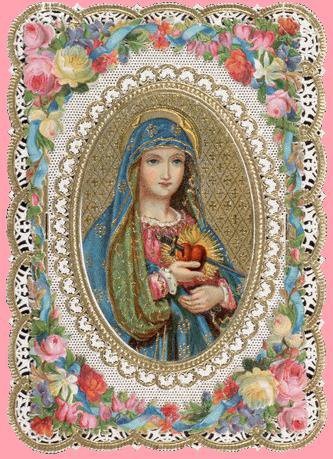
Lace holy card of the Immaculate Heart of Mary. Extremely Fr. Faber’s aesthetic. (Source)

Fr. Faber’s devotion to Our Lady extended beyond his prolific writings. He not only translated St. Louis’s book. In 1846, he undertook his own Marian consecration in the Holy House of Loreto. He had a tendency to refer to the Mother of God as “Mama.” A famous episode related by Monsignor Knox depicts Fr. Faber at one of his more florid moments. After a particularly high Marian procession at the Oratory, he was observed weeping. Without any care for who heard, he cried out, “Won’t Mamma be pleased?” (“The Conversion of Faber,” Pastoral and Occasional Sermons, 891).

None of this spirituality or the writing in which it comes to us fits our modern tastes. It is too perfumed, too sickly-sweet, too campy, too Victorian, too decadent, too redolent of pastel holy cards mouldering in antique prayer books. One critic puts it thus:

There are great slabs of passages, sometimes chapters at a time, which glow with ethereal light but have little content. Hypnotized by his own fluency Faber flows on and on, melodious and tedious…There are awful lapses of taste. (Chapman, quoted here).

And certainly, Faber cared not one shred for taste. The only thing that mattered was the salvation and sanctification of souls. Knox tells us that “‘Art for art’s sake’ had no meaning for him…if a bad verse would have more chance of winning souls than a good verse, down the bad verse would go” (“The Conversion of Faber,” Pastoral and Occasional Sermons, 891). There is much to criticize in this tendency from a purely aesthetic standpoint. Christians should commit themselves to the highest standards in all artistic and literary endeavors.

But it is hard not to like the man weeping after the procession; it is harder still to feel totally averse to passages that glow purple as the evening sky. One has the sense that Fr. Faber would have been a remarkable presence today, if only because his emotionalism and baroque, slightly kitschy aesthetic would have made him an ironic celebrity on Weird Catholic Twitter. Imagine what he would have done with memes!
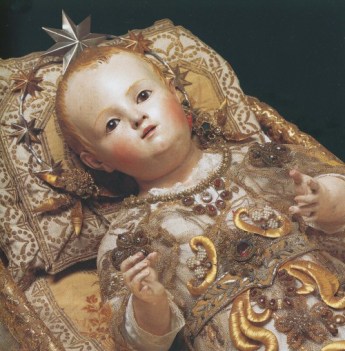
SantaMariaBambina1

Santa Maria Bambina, Southern Italy. (Source)

Yet he would also be a sign of contradiction. We have seen a renewed emphasis on Muscular Christianity, with a proliferation of websites, associations, and thinkpieces all dedicated to restoring “authentic masculinity” and resisting the “feminization” of the liturgy. This is a particularly popular movement within the larger Traditionalist wing of the Church. In brief, the narrative usually runs as follows:

1) After Vatican II, the Novus Ordo initiated a new, “feminine” form of the Mass.
2) This innovation was a substantive capitulation to the Sexual Revolution.
3) Men don’t want to serve a feminized Church in a feminized liturgy, with altar girls, felt banners, versus populum, happy-clappy music, etc.
4) The vocations crisis of the last 30-40 years ensues.
5) As such, we need to restore more pronounced gender binaries and hierarchies along with the Usus Antiquior.

Some of this narrative may be correct. I refrain from judging its particular historical claims, social implications, or theological presuppositions.
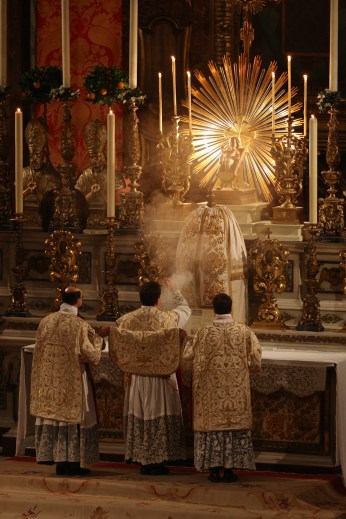
midnightmass3

Midnight Mass at the Brompton Oratory. (Source)

Nevertheless, Fr. Faber confounds that entire way of thinking. He was anything but a “Muscular” Christian. His personality, style, and spirituality were so clearly “feminine” that his own nephew, the publisher Geoffrey Faber, considered him a probable closet case (see David Hilliard’s famous essay “UnEnglish and Unmanly,” page 5). Whether or not his (disputed) conclusions about the priest (and all the leaders of the Oxford Movement) are true, it suffices to say that Fr. Faber was far from the “authentically masculine” man fetishized by the new Muscular Christianity.  Yet liturgically he was known as one of the highest of the high, and his sons at the Brompton Oratory continue that admirable tradition. If nothing else, Fr. Faber’s legacy is the Oratory that still stand as a landmark of reverence, beauty, and transcendent holiness in the midst of postconciliar banality.


What’s more, Fr. Faber is not just a fine hymnodist and devotional writer. He penetrated deep mysteries of the faith. A thoroughgoing Scotist, he advocated the thesis (shared by this author) that Christ probably would have been incarnated anyway even if Adam had never fallen. And as the Church’s Mariology continues to develop, his arguments on behalf of Our Lady’s Co-Redemption may yet prove invaluable. Sophiologists should take note. Here is a man after our own heart.
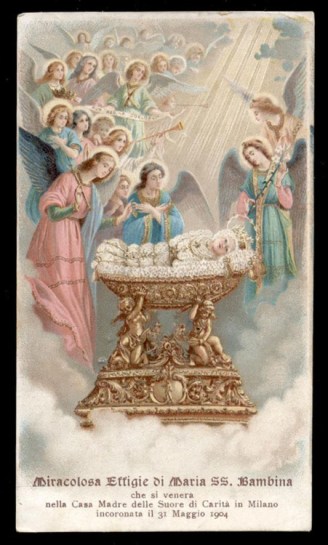
SantaMariaBambina2

A holy card of Santa Maria Bambina. (Source)

Fr. Faber writes of Our Lady’s suffering in a passage worth quoting at length:

But this is not all. She co-operated with our Lord in the redemption of the world in quite a different sense, a sense which can never be more than figuratively true of the Saints. Her free consent was necessary to the Incarnation, as necessary as free will is to merit according to the counsels of God. She gave Him the pure blood, out of which the Holy Ghost fashioned His Flesh and bone and Blood. She bore Him in her womb for nine months, feeding Him with her own substance. Of her was He born, and to her He owed all those maternal offices which, according to common laws, were necessary for the preservation of His inestimable life. She exercised over Him the plenitude of parental jurisdiction. She consented to His Passion; and if she could not in reality have withheld her consent, because it was already involved in her original consent to the Incarnation, nevertheless she did not in fact withhold it, and so He went to Calvary as her free-will offering to the Father. Now, this is co-operation in a different sense from the former, and if we compare it with the co-operation of the Saints, their own co-operation, in which Mary herself alone surpassed them all, we shall see that this other peculiar co-operation of hers was indispensable to the redemption of the world as effected on the Cross. Souls could be saved without the co-operation of the Saints. The soul of the penitent thief was saved with no other co-operation than that of Mary, and, if our Blessed Lord had so willed it, could have been saved without even that. But the co-operation of the Divine Maternity was indispensable. Without it our Lord would not have been born when and as He was; He would not have had that Body to suffer in; the whole series of the Divine purposes would have been turned aside, and either frustrated, or diverted into another channel. It was through the free will and blissful consent of Mary that they flowed as God would have them flow. Bethlehem, and Nazareth, and Calvary, came out of her consent, a consent which God did in no wise constrain. But not only is the co-operation of the Saints not indispensable of itself, but no one Saint by himself is indispensable to that co-operation. Another Apostle might have fallen, half the Martyrs might have sacrificed to idols, the Saints in each century might have been a third fewer in number than they were, and yet the co-operation of the Saints would not have been destroyed, though its magnificence would have been impaired. Its existence depends on the body, not on the separate individuals. No one Saint who can be named, unless perhaps it were in some sense St. Peter, was necessary to the work, so necessary that without him the work could not have been accomplished. But in this co-operation of Mary she herself was indispensable. It depended upon her individually. Without her the work could not have been accomplished. Lastly, it was a co-operation of a totally different kind from that of the Saints. Theirs was but the continuation and application of a sufficient redemption already accomplished, while hers was a condition requisite to the accomplishment of that redemption. One was a mere consequence of an event which the other actually secured, and which only became an event by means of it. Hence it was more real, more present, more intimate, more personal, and with somewhat of the nature of a cause in it, which cannot in any way be predicated of the co-operation of the Saints. And all this is true of the co-operation of Mary, without any reference to the dolors at all…Our Lord had taken a created nature, in order that by its means He might accomplish that great work; so it seemed as if the highest honor and the closest union of a sinless creature with Himself should be expressed in the title of co-redemptress. In fact, there is no other single word in which the truth could be expressed; and, far off from His sole and sufficient redemption as Mary’s co-operation lies, her co-operation stands alone and aloof from all the co-operation of the elect of God. This, like some other prerogatives of our Blessed Lady, cannot have justice done it by the mere mention of it. We must make it our own by meditation before we can understand all that it involves. But neither the Immaculate Conception nor the Assumption will give us a higher idea of Mary’s exaltation than this title of co-redemptress, when we have theologically ascertained its significance. Mary is vast on every side, and, as our knowledge and appreciation of God grow, so also will grow our knowledge and appreciation of her His chosen creature. No one thinks unworthily of Mary, except because he thinks unworthily of God. Devotion to the Attributes of God is the best school in which to learn the theology of Mary; and the reward of our study of Mary lies in a thousand new vistas that are opened to us in the Divine Perfections, into which except from her heights we never could have seen at all.
(“The Compassion of Mary,” emphases in source.)

There is much in this text, and in so many like it, to warm a Catholic’s flagging devotion to the Mother of God. For that treasure alone, we should be grateful.

KitschyMaryCard

A Marian Holy Card. (Source)

As his writing on this subject demonstrates, Father Faber was in all things the most enthusiastic and the most Roman of Catholics. Yet his prodigious work on behalf of the Gospel, and the ardor with which he was wont to express himself, made him a popular figure even among Protestants. His hymns are sung by traditional and mainline Protestant churches even today.

A.W. Tozer held him in high esteem, going so far as to write:

Spinoza wrote of the intellectual love of God, and he had a measure of truth there; but the highest love of God is not intellectual, it is spiritual. God is spirit and only the spirit of man can know Him really. In the deep spirit of a man the fire must glow or his love is not the true love of God. The great of the Kingdom have been those who loved God more than others did. We all know who they have been and gladly pay tribute to the depths and sincerity of their devotion. We have but to pause for a moment and their names come trooping past us smelling of myrrh and aloes and cassia out of the ivory palaces. Frederick Faber was one whose soul panted after God as the roe pants after the water brook, and the measure in which God revealed Himself to his seeking heart set the good man’s whole life afire with a burning adoration rivaling that of the seraphim before the throne. His love for God extended to the three Persons of the Godhead equally, yet he seemed to feel for each One a special kind of love reserved for Him alone. The Pursuit of God, p. 40 (quoted here)

If a modern master of Protestant spirituality can appreciate the peculiar wisdom of this effusive little man, then what excuse do we have? The Church has entrusted him to our memory and will, I hope, some day do so formally at the altar of God.

I began this essay describing the various spiritualities that have animated the Church from its earliest days. Some remain vital, others have disappeared, and some may yet come back from quietude. The strange and fragrant spirituality Father Faber let out into the world may appear as one of those dried-up streams, never again to impart life to the desert of our world. We are not Victorians. Yet this great Oratorian offers his gift to us still. We are the ones who must accept it. I have little doubt that his life, example, and thought are welcome aids in our pursuit of Heaven.

Poem/Song: “On the Strange and Lamentable Tale of the Witches of Saluda”

Bonham_House_1

The Bonham House, Saluda, SC (Source).

It’s been a while since I posted any original wordcraft, so here’s a poem I wrote recently. The last part is a song. I wanted to hearken to the Scotch-Irish traditions of the poor folks who settled the Carolinas. You can hear me sing it on the embedded audio I have included.

On the Strange and Lamentable Tale of the Witches of Saluda

I. The Town

I saw them dancing at the old waterworks
with torchlight in their eyes, huge
gates to unseen countries
of the damned and dying.
Off in the woods, the fog
snaked through like a hungry hound bent
low over the scent
of some lesser beast.
The pines keep our secrets from us,
so we can forget.
Didn’t you know that even the
goats and horses have eyes, ears,
loose lips muttering imprecations
under their breath? Never
look over your shoulder
at a crossroads. Men have died,
petrified, for less.
Or else they shoot into space
and freeze in the rictus of their fathers,
grinning madly at the dead sun
below. I have drawn
salt from the shadow of your footsteps,
I have planted rows of teeth in my head.
What dragons will come
when I bring a scythe
to the harvest?

II. The Purlieu

You hardly know how dark
the young pine woods can be.
Not a patch of tall trees, mind you,
but ones that stand
just about twice your size.
Still plenty of silent life ahead of them.
You can see them at the edge of evening,
surrounding a field surrounding
a low crop of tombstones
all asunder and blurred
by the rain’s improvident hand.
The trees wait there, wordless,
dusk-bleached, lined up like so many
carious teeth. But they are not
what draws my eye
the fathomless
dark that spreads behind
like a growling and
hungry gullet.

III. The Back Yard

It will not go away.

Momma said to come to the table,
no use passing your life
by the back window
daydreaming.

But I could see it pacing the lawn as I ate.

Huge, black,
unblinking, white
of tooth.
I don’t think it ever sleeps.
The heat of the noonday and the
shadow that flies by night
do not afflict it
the stones in its shoes
and the rancid water it sips
out of our traschan lids
do not injure it—
the play of the neighbors
and the tumult of the street
do not distract it.
I have not yet seen it blink.
I have not yet seen it turn its gaze
from the house.
It watches.
I don’t think it ever sleeps.

Momma says
daddy woudn’t have tolerated
any such foolishness.
I don’t know.

It makes not a sound.
I think it knows what we talk about
in the house.
I think it knows when we rise and fall
to our prayers.
I think it listens to what we confess,
to our fights, to the whisper of the rain.

I don’t want to go out there.
I don’t want it to get it.
I don’t think it ever sleeps.

IV. Found in a Buried Notebook, Written in Red Ink

Don’t turn your back to the trees
or walk up the weed-cracked pavement
beneath the sign that reads
CAR  ASH CO N LAUNDRY
and don’t keep the pottery you dig up
in your garden
bonewhite under the red
clay and grey sand. Don’t
venture to the edge of the field that
smells like salt
and don’t keep your teeth in a shoebox
(it might become a skull)
and don’t knock on walls
where there should be a door
or take down the portraits
of the nameless.
Don’t ponder what might have
broken the sign from the fencepost
or written its replacement
in an unknown script.
Don’t let your children go to the post office alone.
Don’t let your daughter play with the dolls
she doesn’t remember receiving.

V. The Song of the Lost Daughters


The young girls singing thread silk in their hair
Io Hymen Hymenaee
Io Hymen Hymenaee
Discarding the rest of the clothes that they wear
Io Hymen Hymenaee
Io Hymen Hymenaee

They join with the voices of the torchbearing throng
Io Hymen Hymenaee
Io Hymen Hymenaee
And soon they forget every other sweet song
Io Hymen Hymenaee
Io Hymen Hymenaee

Songs that illumine the queer, darkened lands
Io Hymen Hymenaee
Io Hymen Hymenaee
Like the water you pour over bloody hands
Io Hymen Hymenaee
Io Hymen Hymenaee

Her lace crown covers her eyes as they lead
Io Hymen Hymenaee
Io Hymen Hymenaee
Her into a thicket that smells of ripe seed
Io Hymen Hymenaee
Io Hymen Hymenaee

To hide from the angels that watch in the trees
Io Hymen Hymenaee
Io Hymen Hymenaee
And teach her the sacred rites of the bees
Io Hymen Hymenaee
Io Hymen Hymenaee

“An will ye cam back to yer mother so fine?”
Io Hymen Hymenaee
Io Hymen Hymenaee
“Ah will ye return to me, daughter of mine?”
Io Hymen Hymenaee
Io Hymen Hymenaee

“Ah mother, dear mother, I can’t come at all”
Io Hymen Hymenaee
Io Hymen Hymenaee
“Until I’ve repeated our first mother’s fall”
Io Hymen Hymenaee
Io Hymen Hymenaee

“The Sabbath is waiting, the dance oh so dear”
Io Hymen Hymenaee
Io Hymen Hymenaee
“To teach us the meaning behind every fear”
Io Hymen Hymenaee
Io Hymen Hymenaee

They never did see her again in the day
Io Hymen Hymenaee
Io Hymen Hymenaee
But once on a new moon, as old people say
Io Hymen Hymenaee
Io Hymen Hymenaee

Seven years waiting and seven years won
Io Hymen Hymenaee
Io Hymen Hymenaee
Seven years burning, but far from the Sun
Io Hymen Hymenaee
Io Hymen Hymenaee

Beware, all me daughters, what hides in the air
Io Hymen Hymenaee
Io Hymen Hymenaee
And never thread silks so fine in your hair
Io Hymen Hymenaee
Io Hymen Hymenaee

100 Things I Would Rather Listen To at Mass than Hymns from the 70’s and 80’s, In No Particular Order

cross17

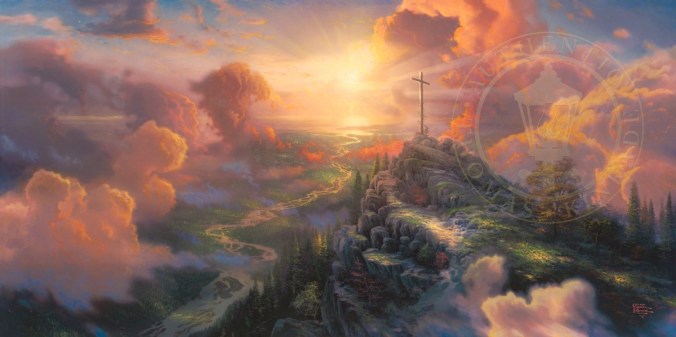
A brilliant friend of mine pointed out that “We Are Called and Gifted By Our God,” “Gather Us In,” “On Eagle’s Wings,” etc. are basically the Catholic, musical equivalent of Thomas Kinkade: bad art enjoyed primarily by old people. (Source).

  1. Gregorian Chant
  2. Byzantine Chant
  3. Old Roman Chant
  4. Ambrosian Chant
  5. Mozarabic Chant
  6. Hildegard Von Bingen
  7. Palestrina
  8. Thomas Tallis
  9. Bruckner
  10. John Tavener
  11. John Taverner
  12. Henryk Gorecki
  13. Arvo Part
  14. Ralph Vaughan Williams
  15. Old Negro Spirituals
  16. The Mormon Tabernacle Choir
  17. Appalachian Shape-Note Singing
  18. Mongolian Throat Singing
  19. Swedish Black Metal
  20. Broadway Showtunes
  21. Spanish Versions of Broadway Showtunes
  22. Esperanto Versions of Broadway Showtunes
  23. Crappy Bootlegged Esperanto Versions of Broadway Showtunes
  24. DMX
  25. Patsy Cline
  26. Irish Folk Ceol
  27. The Game of Thrones Theme Song
  28. Melanie Martinez
  29. All 7 Hours of a Castro Speech
  30. Chris Tomlin (shudder)
  31. YouTube videos about Fitness
  32. RuPaul’s Drag Race
  33. “Shall We Gather at the River?”
  34. David Lynch Cooking Quinoa
  35. Schoenberg
  36. That Weird Russian Guy Who Dances and Makes That Noise with his Lips (you know the one)
  37. The Interviews of Edward Gorey
  38. The Collected Works of Charles Dickens Played Backwards
  39. Machine Metal Music
  40. The Sound of Two Hundred Bees Copulating Simultaneously
  41. A Giant Saw Cutting Off California from the Rest of the Union
  42. Musique concrète
  43. Dissertation Defenses by Statistics Ph.D’s
  44. Mark Zuckerberg (shudder)
  45. The Sound Made by Nikita Kruschev’s Shoe on the Podium, But on Infinite Loop
  46. The Sound Made by Justin Trudeau When He Announced The Year as If It Mattered, But on Infinite Loop
  47. Cats
  48. Ayn Rand Interviews
  49. Vaporwave Remixes of Ayn Rand Interviews
  50. Vaporwave Anything, Really
  51. “Always Look on the Bright Side of Life!”
  52. Mr. G’s Dance from Summer Heights High
  53. A Theory of Justice: The Musical
  54. “Universal Love, Said the Cactus Person”
  55. The Ambient Sounds Recorded at the Varsity in Atlanta
  56. Twelve Germans Arguing About Philology
  57. John Oliver
  58. Ethel Merman
  59. Untranslated Korean Horror Movies
  60. Buskers in the Tube
  61. Robert Nozick Gently Asking Me to Kill 10,000 Contented Cows
  62. Gypsy Music
  63. Fleet Foxes (actually this would be pretty great and like the only good “folk mass” conceivable in any way, shape, or form)
  64. “The Sash”
  65. Ambient Noise Recorded at the Louvre
  66. The Sound of Praying Mantises Fighting Each Other
  67. The Sound of Praying Nuns Fighting Each Other
  68. The Sound of Music
  69. Oral Histories of the Tennessee Valley Authority
  70. Smash Mouth
  71. The Collected Oeuvre of Insane Clown Posse
  72. Gargling
  73. Untranslatable Russian Poetry
  74. Donald Trump (shudder)
  75. Gordon Ramsay Insulting Hell’s Kitchen Contestants
  76. Hideous Yak Noises
  77. The Broken Wind of an Unusually Flatulent Old Vicar in Surrey
  78. Lobsters
  79. Tracey Emin Talking About Her Work As If It Mattered
  80. That Flute Played by Mr. Tumnus
  81. Road Rage
  82. Chevy Chase Reciting Edward Lear
  83. “Your Mom Goes to College”
  84. Lobsters, but Fighting
  85. Gilbert Gottfried Reciting The Faerie Queene
  86. “Just You…And I…Just You…And I…”
  87. The Unrestrained Moans of Passion from the Majestic Wombat in Rut
  88. All the Burps from Arlo: The Burping Pig
  89. All the Burps from Arlo Guthrie Over His Entire Life
  90. “Alice’s Restaurant Massacree” On A Day Other Than Thanksgiving
  91. This List, Recited in Swahili
  92. Little Jimmy Scott
  93. The National Anthem of the USSR
  94. “MacArthur Park” (the original, performed by Richard Harris)
  95. Cardinal Richelieu as Petula Clark
  96. A Medley from Die Dreigroschenoper
  97. Mark Gormley’s “Without You”
  98. A Headline Act from Branson
  99. Wing’s cover of “Dancing Queen”
  100. Silence

A Challenge in Honor of the Sophianic Heart of Mary

ImmaculateHeartofMarySophianic

Sorrowful and Immaculate Heart of Mary, pray for us sinners. (Source).

August is consecrated to the Sorrowful and Immaculate Heart of Mary. Thus, it is a month in which the Church invites us to peer into the profound and luminous abyss of light at the very center of the Mother of God’s Sophianic life. In celebration of this occasion, I’ve decided to dedicate myself to producing or working on something creative every day for the rest of the month. Today, I have already written one poem and started an art project. The latter is especially exciting for me, as it’s been years since I last produced any real art. Too long, really. Pray for me in this sophiological endeavor! I would recommend the same challenge to any Catholic hoping to redeem this particular time.

Finally, Fleet Foxes

Fleet-Foxes-Press-2017

Fleet Foxes, 2017. (Source)

The day we have waited for has arrived. Fleet Foxes have finally returned with a triumph of an album. Those of us who have been longstanding fans of the band will no doubt recognize in Crack-Up, their new release from Nonesuch Records, an expansion and deepening of the artistry that marked their earlier work. A statement released by the band reads:

From the outset of recording, we aspired to make an album that could stand alongside our previous work, venture into its own territory, and that would leave a clear horizon for us moving forward.

Crack-Up does all these things and more. It is an alternately intimate, exuberant, and cerebral collection of songs. Robin Pecknold, the band’s frontman and chief songwriter, spent four years at Columbia University after 2011’s Helplessness Blues. It’s evident that he paid attention in class. Allusions to Shakespeare and Shaw and Beowulf and Goya and Muhammad Ali and classical history pepper the poetic lyrics alongside references to contemporary political events. The rhythm of Pecknold’s words at times seems to evoke the sprung rhyme of Gerard Manley Hopkins (see, for instance, the first song on the album, “I Am All That I Need / Arroyo Seco / Thumbprint Scar“). Musically, Pecknold draws from sources as diverse as medieval music (even mentioning the Dorian mode in some of the lyrics) and Ethiopian jazz. It is, needless to say, a sophisticated album.

Yet its sophistication remains understated. Fleet Foxes manage to avoid the self-important pretensions of their one-time drummer, Father John Misty. Even in songs that comment on the acid politics of our time, we never hear the kind of hamfisted preaching that FJM is so fond of. Instead, we have the sense that we are listening to creative representations, an earnest testimony of experiences and impressions filtered through disparate symbols of personal and civilizational import.

Take this verse from “Cassius,

Song of masses, passing outside
All inciting the fifth of July
When guns for hire open fire
Blind against the dawn
When the knights in iron took the pawn
You and I, out into the night
Held within the line that they have drawn

What a breath of fresh air after Father John Misty’s pompous propaganda! Pecknold never allows his own agenda to get in the way of his first duty as an artistproducing good art.

Consider, if you will, the multiple layers of meaning he invests in one of his songs.

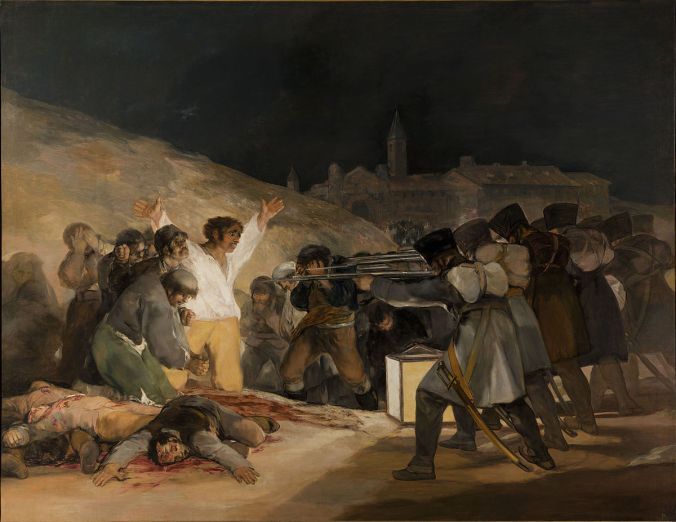
GoyaThirdofMay

A very important painting. (Source).

The painting you see above is The Third of May 1808, by Francisco Goya, circa 1814. The image seems to have influenced one of the best songs on the album, “Third of May / Ōdaigahara.” The music video of that song shows us a splattering of multicolored paint. As it runs across the screen in extreme close-up, we can catch a certain formal resemblance to the flow of spilled blood. Taking into account the album’s overall political orientation, I’d suggest that it’s likely that Pecknold probably sees something of our own social moment in the painting. I would further guess that, as with other songs on the album, the allusion refers to recent cases of police brutality. After all, the painting depicts a dark-skinned man with his hands up about to be killed by men in uniform. If my interpretation is correct, then perhaps the point of the song as represented in the video is to suggest that even the death of innocents can be transfigured into art.

Finding that meaning requires a coalescence of art history, lyrics, video, music, the other songs on the album, and the news. It is, simply put, a minor feat of artistic genius. Of course, Robin Pecknold has provided some rather different elucidation of his own which is well worth checking out (he has a great comment on the line about “carved ivory”). Great art bears many meanings.

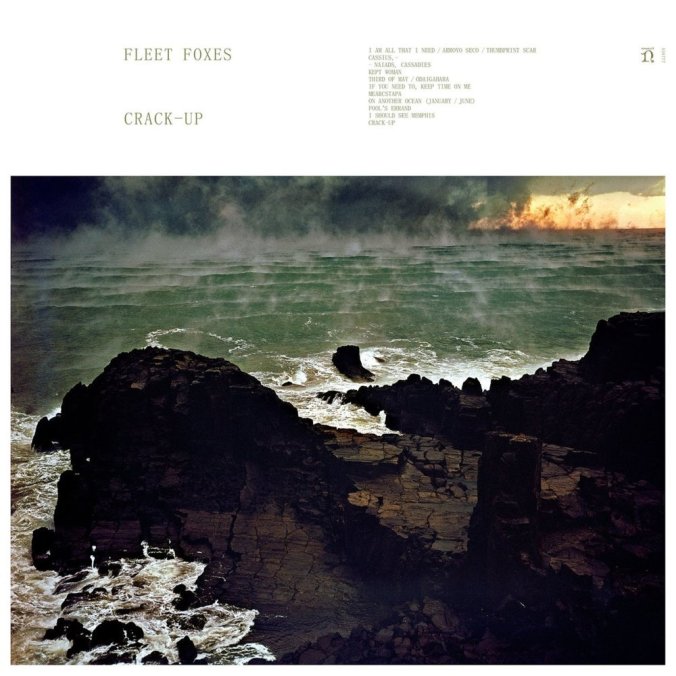
There’s more to like here. Rarely is an album composed of such tightly-wedded form and content. An oceanic motif winds through the lyrics. Likewise, the music rises and falls with the rhythm of the sea, crashing gloriously and settling into glassy streams. Listening to Crack-Up is like diving into a steaming sea, only to feel deeper currents of cool water tug from below. The pelagic theme even extends to the album’s visualsits cover and the (very aesthetic) music video for “Fool’s Errand” both depict the rocky Pacific coast. And those astract arrangements of wet paint that move around in the video for “Third of May / Ōdaigahara” are probably watercolors.


FleetFoxesCrackUp

Album cover, Crack-Up. (Source).

Particular favorites include the haunting “Kept Woman” and the meditative and atmospheric “I Should See Memphis.” The titular, concluding song is pretty great, too. I can’t say that I have too many criticisms. A few of the songs are a bit bland. The album lacks some of the dark beauty that made Helplessness Blues so stirring. Alas. We can’t always get what we want. There is more than enough new spirit in this album to make up for that loss.

Crack-Up
Fleet Foxes, Nonesuch Records
8.5/10 stars