“But There, Besides the Altar, There, is Rest”

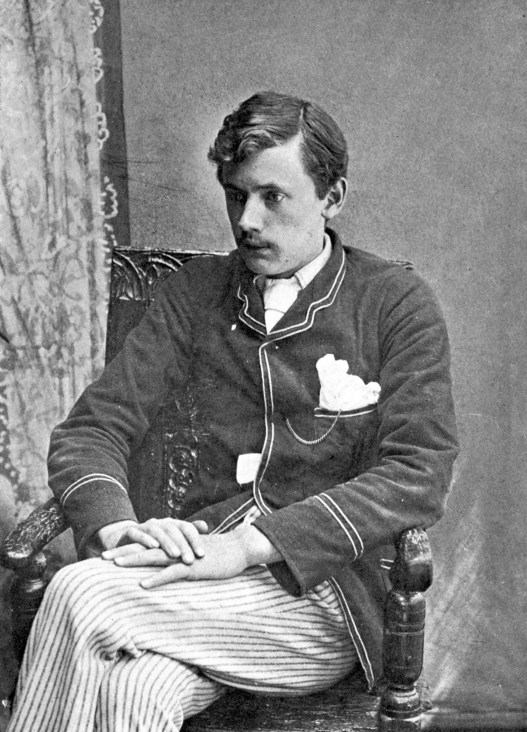
Ernest_Dowson.jpg

Ernest Dowson – a frail, unhappy poet driven by wild passions. Also a Roman Catholic. (Source)

Recently, I have discovered the work of the poet Ernest Dowson (1867-1900). He has swiftly become a favourite. His Decadent verse originated the phrases “gone with the wind” and “the days of wine and roses.” He was also a Catholic convert. His poetry often explores the contrast between the perishable delights of the world and the undying realm of the supernatural. In Dowson, we see the forked path that comes with the recognition of the world’s vanity: the choice lies between hedonistic decadence and the rigors of ascesis and contemplation. These two monastic poems express precisely that tension in his sad life as well as his powerful artistic vision.

Nuns of the Perpetual Adoration

Calm, sad, secure; behind high convent walls,
These watch the sacred lamp, these watch and pray:
And it is one with them when evening falls,
And one with them the cold return of day.

These heed not time; their nights and days they make
Into a long, returning rosary,
Whereon their lives are threaded for Christ’s sake;
Meekness and vigilance and chastity.

A vowed patrol, in silent companies,
Life-long they keep before the living Christ.
In the dim church, their prayers and penances
Are fragrant incense to the Sacrificed.

Outside, the world is wild and passionate;
Man’s weary laughter and his sick despair
Entreat at their impenetrable gate:
They heed no voices in their dream of prayer.

They saw the glory of the world displayed;
They saw the bitter of it, and the sweet;
They knew the roses of the world should fade,
And be trod under by the hurrying feet.

Therefore they rather put away desire,
And crossed their hands and came to sanctuary
And veiled their heads and put on coarse attire:
Because their comeliness was vanity.

And there they rest; they have serene insight
Of the illuminating dawn to be:
Mary’s sweet Star dispels for them the night,
The proper darkness of humanity.

Calm, sad, secure; with faces worn and mild:
Surely their choice of vigil is the best?
Yea! for our roses fade, the world is wild;
But there, beside the altar, there, is rest.


Carthusians

Through what long heaviness, assayed in what strange fire,
Have these white monks been brought into the way of peace,
Despising the world’s wisdom and the world’s desire,
Which from the body of this death bring no release?

Within their austere walls no voices penetrate;
A sacred silence only, as of death, obtains;
Nothing finds entry here of loud or passionate;
This quiet is the exceeding profit of their pain:

From many lands they came, in divers fiery ways;
Each knew at last the vanity of earthly joys;
And one was crowned with thorns, and one was crowned with bays,
And each was tired at last of the world’s foolish noise.

It was not theirs with Dominic to preach God’s holy wrath,
They were too stern to bear sweet Francis’ gentle sway;
Theirs was a higher calling and a steeper path,
To dwell alone with Christ, to meditate and pray.

A cloistered company, they are companionless,
None knoweth here the secret of his brother’s heart:
They are but come together for more loneliness,
Whose bond is solitude and silence all their part.

O beatific life! Who is there shall gainsay,
Your great refusal’s victory, your little loss,
Deserting vanity for the more perfect way,
The sweeter service of the most dolorous Cross.

Ye shall prevail at last! Surely ye shall prevail!
Your silence and austerity shall win at last:
Desire and mirth, the world’s ephemeral lights shall fail,
The sweet star of your queen is never overcast.

We fling up flowers and laugh, we laugh across the wine;
With wine we dull our souls and careful strains of art;
Our cups are polished skulls round which the roses twine:
None dares to look at Death who leers and lurks apart.

Move on, white company, whom that has not sufficed!
Our viols cease, our wine is death, our roses fail:
Pray for our heedlessness, O dwellers with the Christ!
Though the world fall apart, surely ye shall prevail.

God is Real, Not Nice

Moses-and-the-Ten-Commandments-GettyImages-171418029-5858376a3df78ce2c3b8f56d.jpg

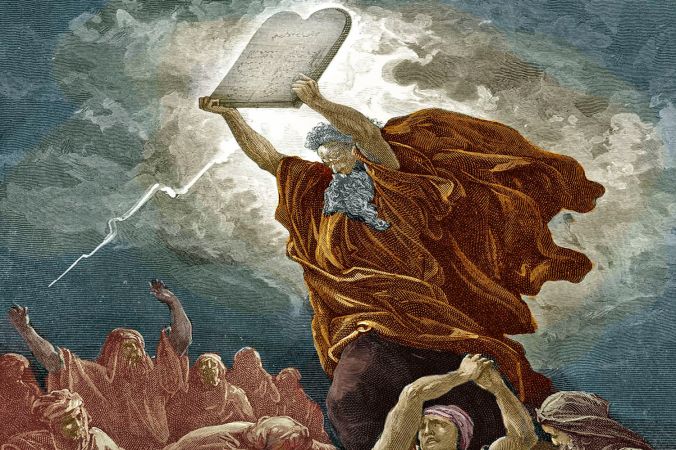
Colorized detail of Moses Breaking the Tables of the Law, by Gustave Dore. (Source)

Rabbi Samson Raphael Hirsch, the spiritual father of Modern Orthodox Judaism, launched his movement in the nineteenth century with an assault on the Frankfurt Reformers entitled “Religion Allied to Progress.” Hirsch decries the new forms of liberal, secular religion he saw animating the well-to-do populations of Jews in Germany.

“But behold! The prophet of the new message came into their midst with the cry of ‘religion allied to progress’; he filled the blank, pacified their conscience and wiped out their shame. With this magic word he turned irreligion into Godliness, apostasy into priesthood, sin into merit, frivolity into virtue, weakness into strength, thoughtlessness into profundity. By this one magic phrase he distilled the ancient world-ranging spirit of the Torah into a single aromatic drop of perfume so fragrant that in the most elegant party dress they could carry it round with them in their waistcoat pockets without being ashamed. By means of it, he carved out of the ponderous old rock-hewn Tablets of the Law ornamental figures so tiny that people gladly found room for them on smart dressing tables, in drawing-rooms and ballrooms. By means of this one magic phrase he so skilfully loosened the rigid bonds of the old law with its 613 locks and chains that the Divine Word which until then had inflexibly prohibited many a desire and demanded many a sacrifice, henceforth became the heavenly manna which merely reflected everybody’s own desires, echoed their own thoughts, sanctified their own aspirations and said to each one: ‘Be what you are, enjoy what you fancy, aspire to what you will, whatever you may be you are always religious, whatever you may do–all is religion; continue to progress, for the more you progress the further you move from the ancient way, and the more you cast off old Jewish customs the more religious and acceptable to God will you be….'”

These prophetic words came to mind as I was reading Dr. Ulrich Lehner’s excellent new offering, God Is Not Nice (2017). Published by Ave Maria Press, the book is a cannon-blast through America’s spiritual miasma. His target? The false image of God as a nice guy. I’m afraid that, as the book shows, He isn’t very “nice” at all. He’s so much better than that.

Each chapter considers one of God’s attributes as revealed in the Scriptures, the Magisterium, and Church History. How wonderful to come across a work of theology that isbrace yourselfactually about God! Gone are the boring and programmatic encumberments that so often clog up the pages of the theological press. Lehner is centrally concerned with God’s character, and only secondarily with what that must mean to us, His creations.

TheBurningBush.jpg

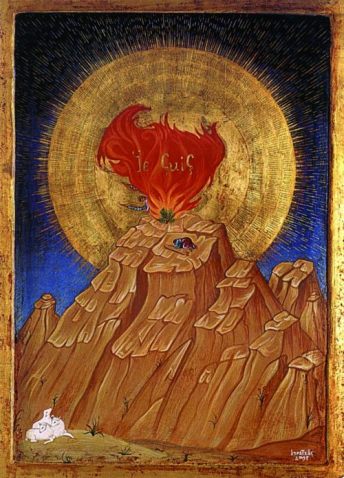
Lehner drinks deeply of the Scriptures. He often returns to Old Testament narratives of encounter with a God who surpasses every expectation. (Source)

It is also one of the most erudite pieces of popular religious writing I have ever read. Sprinkled in among the obligatory references to the Inklings are much heavier hitters. One finds ideas drawn from Martin Buber, Gabriel Marcel, John Crowe Ransom, Rodney Stark, Robert Spaemann, Dietrich von Hildebrand, and many more. Lehner’s prodigious knowledge of philosophy was especially apparent, as he deftly maneuvered between classical Thomism and recent German thoughtnot exactly the fare one expects from a major Church Historian. God Is Not Nice also has the distinction of being the only book of popular devotion I’ve encountered that speaks favorably of Erich Fromm (and cribs some of his ideas). It is to Lehner’s credit as a teacher that the reader never feels as if he’s suddenly entered rare air. He presents some difficult concepts with a simplicity that never sacrifices substance. An eighth grader could read and, more importantly, understand the text. So could an Evangelical. The book never ceases to be Catholic, but one is hard-pressed to find many insights that are so uniquely Papist as to dissuade Protestant readers. Its broad appeal comes not from a watering down of the Faith’s distinctives, but a consistent penetration of those things which lie at the very heart of the Christian life.

The book is also imbued with a deep humanity. First, Lehner’s understated humor crops up now and again, such as the time he casually compares the Prosperity Gospel preachers to Nazis (62). Or when, at the start of a chapter on intimacy with God, he writes, “Nakedness in public is a clear no-no” (80). It is difficult to imagine Lehner writing that line with a straight face, and impossible to read it with one.

The humanity of the text lies in its content as well as its style. Although Lehner hardly ever proposes specific ideas for spiritual renewal, the call to conversion is constant, simple, and universal enough that it all feels eminently practical. It works in large part because Lehner never invests his project with the unwieldy freight of, say, the hopes and failures of socially conservative American Christianity. This book is not The Benedict Option. Sure enough, Lehner is critical; for example, I was surprised to see such a forthright condemnation of the Enlightenment from an author who has made it is his life’s study. But Lehner never carries his criticism into the unpleasant realm of polemic, as Dreher so often does in his own book. What matters to Lehner is the individual human soul, not the social conditions under which the Church must forge her way through history. He is realistic about the quotidian quality of our spiritual lives. Everything must come back to the individual’s relationship with God, a relationship largely shaped by the perfectly ordinary moments of our day. The book never leaves this vision.

That isn’t to say that Lehner advocates a purely individualistic spirituality, like some eighteenth-century revivalist, red in the face, handkerchief flailing. I was struck many times by the familial note in Lehner’s work. Instead of shying away from appearing in his own workthe hallmark of a bloodless academicLehner grounds his spiritual call to arms in his own life. Lots of the book’s wisdom is drawn from its author’s experience of parenting. We read, in a chapter on God and suffering:

In fact, many of our children learn from the first hour of Sunday school that God wants everybody to be happy. Some parents might object that a different image of God would terrify children. I don’t think so – and I am speaking with the experience of parenting five kids. (100)

Or elsewhere, in a discussion of the Redemption:

A nice god might pardon us without care for our repentance, but so would a terrible parent who is not interested in us becoming mature and responsible persons. (118)

Or this charming anecdote, while pondering human freedom and what we really mean when we say that the Lord is “a God of Surprises”:

Of course, God is omniscient regarding all our actions and thoughts, but he leaves us our freedom and seems to choose to be surprised. I cannot help but compare this to my own parenting. When my younger children prepare a surprise present for my birthday, I usually find traces in the kitchen and the living room: crayons, pieces of paper, glue sticks, and first drafts with ‘Happy Birthday’ on them. Nevertheless, I choose to be surprised when they hand me their work of art. I think that with an omniscient God, it must be somehow like this. (126)

It thus didn’t come as too great a surprise when, at the end of his text, Lehner turned to a brief yet powerful meditation on St. Joseph. In some sense, St. Joseph is the paragon of all that Lehner advocates. He dwelt with God day to day in an intimacy unclouded by the various pretty illusions to which we all fall prey. Instead, St. Joseph drew the strength he needed from a true knowledge of God’s character. That knowledge created a great love and humble awe in him. For us, as for the Frankfurt Jews of Hirsh’s day, God is little more than a plaything or bric-a-brac, “relegated to a mantelpiece long ago and…only taken down on Sundays.” (106).

It was not so with St. Joseph. He knew the awful and living God as a human being, as one beloved. But for St. Joseph, that God wasn’t “nice.” After reading Lehner’s book, we too may be lucky enough to know that God’s not nice. He’s real.

“The Fair and Fatal King”

CharlesStatue1

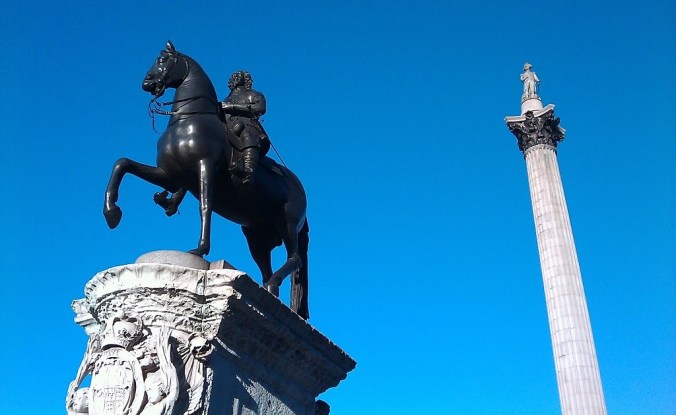
Two heroes, one square: Charles I and Nelson. (Source)

Today may be the anniversary of Louis XVI’s execution, but I just found a wonderful poem about His Majesty Charles I that I wanted to share with my readers. Something to meditate upon before the 30th.

By the Statue of King Charles at Charing Cross

Lionel Johnson
To William Watson

Sombre and rich, the skies,
Great glooms, and starry plains;
Gently the night wind sighs;
Else a vast silence reigns.

The splendid silence clings
Around me: and around
The saddest of all kings,
Crowned, and again discrowned.

Comely and calm, he rides
Hard by his own Whitehall.
Only the night wind glides:
No crowds, nor rebels, brawl.

Gone too, his Court: and yet,
The stars his courtiers are:
Stars in their stations set;
And every wandering star.

Alone he rides, alone,
The fair and fatal King:
Dark night is all his own,
That strange and solemn thing.

Which are more full of fate:
The stars, or those sad eyes?
Which are more still and great:
Those brows, or the dark skies?

Although his whole heart yearn
In passionate tragedy,
Never was face so stern
With sweet austerity.

Vanquished in life, his death
By beauty made amends:
The passing of his breath
Won his defeated ends.

Brief life, and hapless? Nay:
Through death, life grew sublime.
Speak after sentence? Yea:
And to the end of time.

Armoured he rides, his head
Bare to the stars of doom;
He triumphs now, the dead,
Beholding London’s gloom.

Our wearier spirit faints,
Vexed in the world’s employ:
His soul was of the saints;
And art to him was joy.

King, tried in fires of woe!
Men hunger for thy grace:
And through the night I go,
loving thy mournful face.

Yet, when the city sleeps,
When all the cries are still,
The stars and heavenly deeps
Work out a perfect will.

Five Poems by Clark Ashton Smith

15-clarke-faust

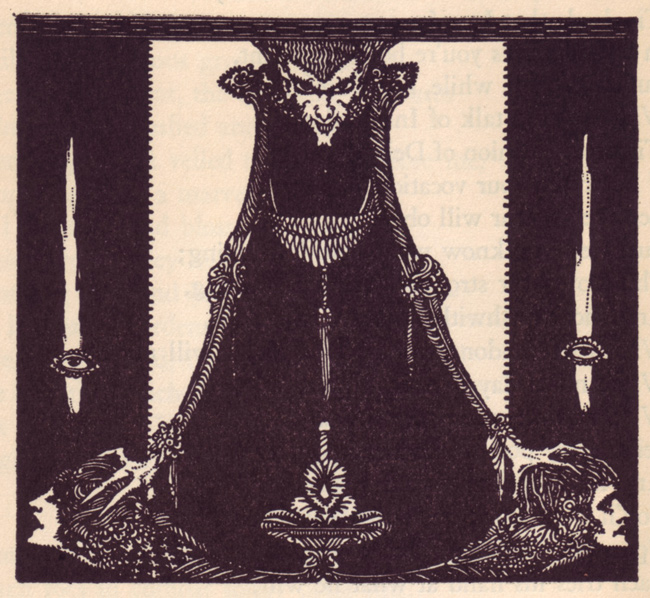
One of Harry Clarke’s illustrations of Faust. He also produced a celebrated set of illustrations of Poe. (Source)

Clark Ashton Smith (1893-1961) was most famous for his publications in Weird Tales and his consequent literary association with H.P. Lovecraft and Robert E. Howard. He had a profound talent and produced copious work in the Eldritch School of American Decadence. In Smith’s work one can easily discover similarities with both Lovecraft, his more famous colleague, and greater predecessors like Poe and Baudelaire. The violent inventiveness of his language calls to mind a demon-crazed Hopkins. I have selected five representative poems that all treat a common theme: beauty.

A Dream of Beauty
(1911)

I dreamed that each most lovely, perfect thing
That nature hath, of sound and form and hue—
The winds, the grass, the light-concentering dew,
The gleam and swiftness of the sea-bird’s wing;
Blueness of sea and sky, and gold of storm
Transmuted by the sunset, and the flame
Of autumn-colored leaves, before me carne,
And, meeting, merged to one diviner form.

Incarnate Beauty ’twas, whose spirit thrills
Through glaucous ocean and the greener hills,
And in the cloud-bewildered peaks is pent.
Her face the light of fallen planets wore,
But as I gazed, in doubt and wonderment,
Mine eyes were dazzled, and I saw no more.


The Refuge of Beauty
(1918)

From regions of the sun’s half-dreamt decay,
All day the cruel rain strikes darkly down;
And from the night thy fatal stars shall frown—
Beauty, wilt thou abide this night and day ?

Roofless, at portals dark and desperate,
Wilt thou a shelter unrefused implore,
And past the tomb’s too-hospitable door
Evade thy lover in eluding Hate ?

Alas, for what have I to other thee ? —
Chill halls of mind, dank rooms of memory
Where thou shalt dwell with woes and thoughts infirm;

This rumor-throngèd citadel of Sense,
Trembling before some nameless imminence;
And fellow-guestship with the glutless Worm.


The Mirrors of Beauty
(1922)

Beauty has many mirrors to ensphere
Her presence or her passing: orbs of dew;
Far-flooding Amazons with margents new;
The narrowing circlet of the desert mere;
Deep wells on which the ruby planets rear;
Blades from Damascus; gems of Xanadu;
And pools that hold a falcon-hovered blue
Or eves whereon the ghostly owlets veer.

Often, upon the solitary sea,
She lieth, ere the wind shall gather breath—
One with the reflex of infinity;
In oriels filled with some conflagrant sky
Her vision dwells, or in the ring-dove’s eye,
Or the black crystal of the eyes of Death.


The Orchid of Beauty
(1922)

Beauty, thou orchid of immortal bloom,
Sprung from the fire and dust of perished spheres,
How art thou tall in these autumnal years
With the red rain of immemorial doom,
And fragrant where the lesser suns illume,
For sustenance of Life’s forgotten tears.
Ever thy splendor and thy light appears
Like dawn from out the midnight of the tomb.

Colors, and glints, and glamors unrecalled,
Richly thy petals intricate revive:
Blossom, whose roots are in eternity,
The faithful soul, the sentience darkly thralled,
In dream and wonder evermore shall strive
At Edens lost of time and memory.


You are not Beautiful
(1923)

You are not beautiful; but, ah, too long
I sought, and found a slowly growing grace;
Till fairer now than beauty is your face,
And all your silence dearer than a song.


“Awake and Sing and Be All Wing”

MostHolyNameofJesus

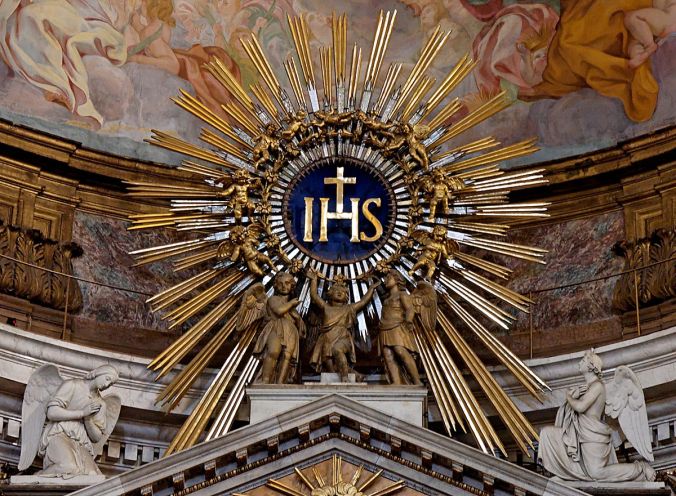
The Most Holy Name of Jesus at the High Altar of the Gesu, Rome. (Source)

To the Name above every Name, the Name of Jesus

By Richard Crashaw

A HYMN


I SING the Name which None can say

But touch’t with An interiour Ray:

The Name of our New Peace; our Good:

Our Blisse: and Supernaturall Blood:

The Name of All our Lives and Loves.

Hearken, And Help, ye holy Doves!

The high-born Brood of Day; you bright

Candidates of blissefull Light,

The Heirs Elect of Love; whose Names belong

Unto The everlasting life of Song;

All ye wise Soules, who in the wealthy Brest

Of This unbounded Name build your warm Nest.

Awake, My glory. Soul, (if such thou be,

And That fair Word at all referr to Thee)

Awake and sing

And be All Wing;

Bring hither thy whole Self; and let me see

What of thy Parent Heaven yet speakes in thee,

O thou art Poore

Of noble Powres, I see,

And full of nothing else but empty Me,

Narrow, and low, and infinitely lesse

Then this Great mornings mighty Busynes.

One little World or two

(Alas) will never doe.

We must have store.

Goe, Soul, out of thy Self, and seek for More.

Goe and request

Great Nature for the Key of her huge Chest

Of Heavns, the self involving Sett of Sphears

(Which dull mortality more Feeles then heares)

Then rouse the nest

Of nimble, Art, and traverse round

The Aiery Shop of soul-appeasing Sound:

And beat a summons in the Same

All-soveraign Name

To warn each severall kind

And shape of sweetnes, Be they such

As sigh with supple wind

Or answer Artfull Touch,

That they convene and come away

To wait at the love-crowned Doores of

This Illustrious Day.

Shall we dare This, my Soul? we’l doe’t and bring

No Other note for’t, but the Name we sing.

Wake Lute and Harp

And every sweet-lipp’t Thing

That talkes with tunefull string;

Start into life, And leap with me

Into a hasty Fitt-tun’d Harmony.

Nor must you think it much

T’obey my bolder touch;

I have Authority in Love’s name to take you

And to the worke of Love this morning wake you;

Wake; In the Name

Of Him who never sleeps, All Things that Are,

Or, what’s the same,

Are Musicall;

Answer my Call

And come along;

Help me to meditate mine Immortall Song.

Come, ye soft ministers of sweet sad mirth,

Bring All your houshold stuffe of Heavn on earth;

O you, my Soul’s most certain Wings,

Complaining Pipes, and prattling Strings,

Bring All the store

Of Sweets you have; And murmur that you have no more.

Come, né to part,

Nature and Art!

Come; and come strong,

To the conspiracy of our Spatious song.

Bring All the Powres of Praise

Your Provinces of well-united Worlds can raise;

Bring All your Lutes and Harps of Heaven and Earth;

What ére cooperates to The common mirthe

Vessells of vocall Ioyes,

Or You, more noble Architects of Intellectuall Noise,

Cymballs of Heav’n, or Humane sphears,

Solliciters of Soules or Eares;

And when you’are come, with All

That you can bring or we can call;

O may you fix

For ever here, and mix

Your selves into the long

And everlasting series of a deathlesse Song;

Mix All your many Worlds, Above,

And loose them into One of Love.

Chear thee my Heart!

For Thou too hast thy Part

And Place in the Great Throng

Of This unbounded All-imbracing Song.

Powres of my Soul, be Proud!

And speake lowd

To All the dear-bought Nations This Redeeming Name,

And in the wealth of one Rich Word proclaim

New Similes to Nature.

May it be no wrong

Blest Heavns, to you, and your Superiour song,

That we, dark Sons of Dust and Sorrow,

A while Dare borrow

The Name of Your Dilights and our Desires,

And fitt it to so farr inferior Lyres.

Our Murmurs have their Musick too,

Ye mighty Orbes, as well as you,

Nor yields the noblest Nest

Of warbling Seraphim to the eares of Love,

A choicer Lesson then the joyfull Brest

Of a poor panting Turtle-Dove.

And we, low Wormes have leave to doe

The Same bright Busynes (ye Third Heavens) with you.

Gentle Spirits, doe not complain.

We will have care

To keep it fair,

And send it back to you again.

Come, lovely Name! Appeare from forth the Bright

Regions of peacefull Light,

Look from thine own Illustrious Home,

Fair King of Names, and come.

Leave All thy native Glories in their Georgeous Nest,

And give thy Self a while The gracious Guest

Of humble Soules, that seek to find

The hidden Sweets

Which man’s heart meets

When Thou art Master of the Mind.

Come, lovely Name; life of our hope!

Lo we hold our Hearts wide ope!

Unlock thy Cabinet of Day

Dearest Sweet, and come away.

Lo how the thirsty Lands

Gasp for thy Golden Showres! with longstretch’t Hands.

Lo how the laboring Earth

That hopes to be

All Heaven by Thee,

Leapes at thy Birth.

The’ attending World, to wait thy Rise,

First turn’d to eyes;

And then, not knowing what to doe;

Turn’d Them to Teares, and spent Them too.

Come Royall Name, and pay the expence

Of all this Pretious Patience.

O come away

And kill the Death of This Delay.

O see, so many Worlds of barren yeares

Melted and measur’d out is Seas of Teares.

O see, The Weary liddes of wakefull Hope

(Love’s Eastern windowes) All wide ope

With Curtains drawn,

To catch The Day-break of Thy Dawn.

O dawn, at last, long look’t for Day!

Take thine own wings, and come away.

Lo, where Aloft it comes! It comes, Among

The Conduct of Adoring Spirits, that throng

Like diligent Bees, And swarm about it.

O they are wise;

And know what Sweetes are suck’t from out it.

It is the Hive,

By which they thrive,

Where All their Hoard of Hony lyes.

Lo where it comes, upon The snowy Dove’s

Soft Back; And brings a Bosom big with Loves.

Welcome to our dark world, Thou

Womb of Day!

Unfold thy fair Conceptions; And display

The Birth of our Bright Ioyes.

O thou compacted

Body of Blessings: spirit of Soules extracted!

O dissipate thy spicy Powres

(Clowd of condensed sweets) and break upon us

In balmy showrs;

O fill our senses, And take from us

All force of so Prophane a Fallacy

To think ought sweet but that which smells of Thee.

Fair, flowry Name; In none but Thee

And Thy Nectareall Fragrancy,

Hourly there meetes

An universall Synod of All sweets;

By whom it is defined Thus

That no Perfume

For ever shall presume

To passe for Odoriferous,

But such alone whose sacred Pedigree

Can prove it Self some kin (sweet name) to Thee.

Sweet Name, in Thy each Syllable

A Thousand Blest Arabias dwell;

A Thousand Hills of Frankincense;

Mountains of myrrh, and Beds of species,

And ten Thousand Paradises,

The soul that tasts thee takes from thence.

How many unknown Worlds there are

Of Comforts, which Thou hast in keeping!

How many Thousand Mercyes there

In Pitty’s soft lap ly a sleeping!

Happy he who has the art

To awake them,

And to take them

Home, and lodge them in his Heart.

O that it were as it was wont to be!

When thy old Freinds of Fire, All full of Thee,

Fought against Frowns with smiles; gave Glorious chase

To Persecutions; And against the Face

Of Death and feircest Dangers, durst with Brave

And sober pace march on to meet A Grave.

On their Bold Brests about the world they bore thee

And to the Teeth of Hell stood up to teach thee,

In Center of their inmost Soules they wore thee,

Where Rackes and Torments striv’d, in vain, to reach thee.

Little, alas, thought They

Who tore the Fair Brests of thy Freinds,

Their Fury but made way

For Thee; And serv’d them in Thy glorious ends.

What did Their weapons but with wider pores

Inlarge thy flaming-brested Lovers

More freely to transpire

That impatient Fire

The Heart that hides Thee hardly covers.

What did their Weapons but sett wide the Doores

For Thee: Fair, purple Doores, of love’s devising;

The Ruby windowes which inrich’t the East

Of Thy so oft repeated Rising.

Each wound of Theirs was Thy new Morning;

And reinthron’d thee in thy Rosy Nest,

With blush of thine own Blood thy day adorning,

It was the witt of love óreflowd the Bounds

Of Wrath, and made thee way through All Those wounds.

Wellcome dear, All-Adored Name!

For sure there is no Knee

That knowes not Thee.

Or if there be such sonns of shame,

Alas what will they doe

When stubborn Rocks shall bow

And Hills hang down their Heavn-saluting Heads

To seek for humble Beds

Of Dust, where in the Bashfull shades of night

Next to their own low Nothing they may ly,

And couch before the dazeling light of thy dread majesty.

They that by Love’s mild Dictate now

Will not adore thee,

Shall Then with Just Confusion, bow

And break before thee.
A Note of Gratitude at Year’s End

LondonNewYears.jpg

Happy New Year! (Source)

Here are XVII things for which I am grateful in the year of Our Lord MMXVII.

1. Graduating from the University of Virginia and starting the next phase of my academic career at the University of Oxford, as well as everyone who has helped me along the way.

2. All of the friends I have left behind in Virginia, and all of the friends I have made at Oxfordfrom Staggers, my Ecclesiastical History cohort, and the Companions of Malta. Also my wonderful family who have been there for me throughout the transition.

3. Everyone who has taken the time and effort to read, share, and respond to what I have written at this blog. As of this writing, I’ve gotten 44,127 views.

4. All of the support I received when my grandmother died right before Holy Week.

5. The fact that I have several friends who have started the process of entering or returning to the Church.

6. David Lynch, Paolo Sorrentino, Peter Morgan, and Noah Hawley.

7. Rekindling my love of creating art.

8. The new basset hound my family got this winter and the rabbits we received in the spring. Not to mention the continued good health of our other pets.

9. Gin and Tonics, Whiskey Sours, and St. Germaine.

10. All the museums I have worked in or visited.

11. Discovering the joys of sticky toffee pudding.

12. My Marian consecration. The continued friendship of many saints, including St. Philip Neri and the Blessed John Henry Newman. Also the many beautiful liturgies I had the chance to attend this year.

13. The memory of those warm and golden weeks on the Lawn between the end of Spring exams and the beginning of final exercises.

14. All of the great music I have come across this year (The Revolutionary Army of the Infant Jesus, David Lang, a few pieces by John Tavener and Zbgniew Preisner, George Jones and Monteverdi, Bernstein, Gilbert & Sullivan, Chrysta Bell, James Carr and Pokey LaFarge, Gaelynn Lea, Jackson C. Frank, and so much more).

15. A new appreciation for William Blake and an introduction to the poetry of R.S. Thomas.

16. The fact that we haven’t all been nuked to kingdom come yet.

17. The laughter I have happily shared with friends and family.

May the good Lord bless all of us in the coming year of His grace!

When the Sacred is Strange: The Art of Giovanni Gasparro

Screen Shot 2017-11-11 at 11.25.56 PM.png

St. John Damascene and the St. Virgin Tricherusa, Giovanni Gasparro. Here we see Gasparro depicting a legend from the Saint’s life that is particularly appropriate for an artist. The work also represents the unity of Western and Eastern visual traditions in the transcendent Divinity. (Source)

UPDATE 4/2/20: It has recently come to my attention that Giovanni Gasparro, the artist profiled here, whose work I have admired at this blog on several occasions, has just produced a painting that reproduces the vicious anti-Semitic trope of Jewish ritual murder. This lie has historically led to violence against the Jews and, to put it lightly, is a subject unbecoming of a Christian painter. I condemn it in the strongest possible terms. While I used to look to Mr. Gasparro as a prime example of what Christian art could be in our postmodern era, his embrace of imagery more fit for the pages of Der Stürmer means that I can no longer endorse him. Nevertheless, I have decided to keep this essay up online because it enunciates certain principles about art that I think remain important. I hope that my readers will understand that they reflect an assessment of Mr. Gasparro’s value as religious art that I no longer hold. 

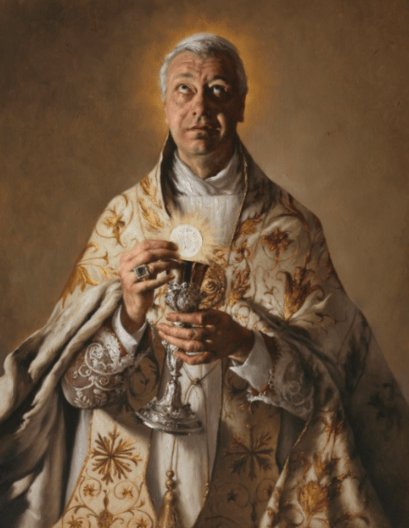
Recently there came into my newsfeed an article by Hilary White Obl.S.B. of What’s Up with Francischurch?. The piece was an extended criticism of Giovanni Gasparro, an Italian artist whose paintings inspired a few of the meditations I have written before on this blog. As someone who has long admired Mr. Gasparro’s Neo-Baroque art, I was happy to see that Rorate Caeli recently profiled one of his pieces. Ms. White was, it seems, partially responding to this attention. However, the more I read of her article, the more I found myself in stark disagreement with her analysis and broader philosophy.

While I have in the past appreciated her reporting as well as the monastic spirit she brings to her work, I confess that I was surprised at the poor quality of her post. I would not ordinarily seek out controversy, but as it seems that Ms. White’s post is making the rounds of the Tradisphere, I felt it imperative to offer a counter perspective.

There are many problems with the article. It is a textbook example of how not to write about art and theology, failing comprehensively at description, prescription, and imagination. She focuses too heavily on one work, Gasparro’s St. Pius X Pontifex Maximus. When she looks at other examples of his art, her analysis – if that is the right word for her summary denunciations – always remains far too cursory to do justice to such a talented artist. And while she notes that Gasparro is a master draughtsman, she follows up this comment with the presumptive assertion that Gasparro “is someone who still approaches sacred subjects with a distinctly modernist mindset.”

Screen Shot 2017-11-11 at 7.07.49 PM

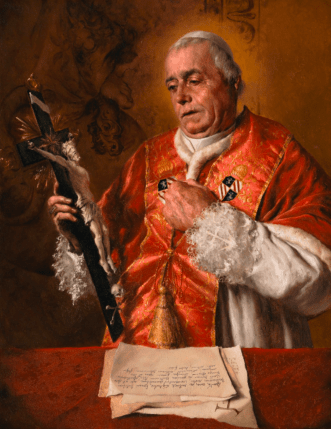
St. Pius X Pontifex Maximus, Giovanni Gasparro. (Source)

There are overarching philosophical problems with Ms. White’s argument. But I’d prefer to begin with her shoddy treatment of the material itself.

To start with a small, but, I think, a representative example; Ms. White claims that in Gasparro’s portrait of Pope St. Pius X, the light falls on the Pope’s face in a sinister way. She writes,

But the painting of Pius X is underlit, a type of lighting that we associate with evil. If you see horror movies, the light is often placed this way on a face to give it a frightening, even demonic effect. It’s what springs to mind: where does a light come from if it’s up from below? Still, is hell’s light this white, electric glare?

This effect, illuminating the facial structure from an odd and unnatural angle – light doesn’t usually come from the ground up, still less heavenly light – the underside of the brow ridge lit up, giving the eye sockets a sickly, sunken appearance, etc… None of that is going to be found in genuine devotional sacred art.

An interesting idea, but one that misses the mark.

For one thing, the Pope is not underlit. It would be more accurate to say that he’s side-lit. There is a striking similarity in the way the light falls in Gasparro’s piece and the photograph of St. Pius to which Ms. White compares it. Nor is side-lighting unusual in Catholic art. Zubarán’s famous St. Francis in Meditation (1635-39) uses almost exactly the same angle for a much more sinister effect.

Screen Shot 2017-11-11 at 9.57.24 PM.png

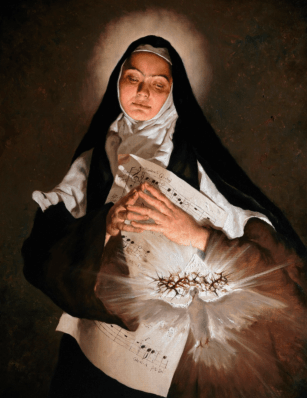
St. Elizabeth of the Trinity, Giovanni Gasparro. In which a saint is underlit, and with good reason. (Source)

Her rather contrived interpretation requires one of two presuppositions: first, that the symbolic lexicon of sacred, or, indeed, Western art is so narrow as to entail only a very limited range of connotations in the use of light, and secondly, that Gasparro’s work is intrinsically profane, deceptive, or downright evil. Neither of these assumptions is fair to the the artwork. They obscure its meaning rather than illuminate it.

But this point is relatively minor compared to some of Ms. White’s other egregious analysis. She dismisses Gasparro’s oeuvre as “surrealist, not sacred art,” with particular attention to his common motif of multiplied hands. She takes exception to the way he depicts faces, as well. Once again, we can see this tendency on display in her take on the Pius X portrait:

Giuseppe Sarto – even in death – had a very “beatific” face, handsome and always with a very assured and calm expression. I can’t imagine him ever making a face like the one in the painting. In fact, it looks more like what you’d get if you cloned Pius X and added a few drops of Nigel Farage.

She goes on to suggest that the “lumps and bumps” on the face of Gasparro’s Pius X are unsound, and that his expression inappropriately reflects “apprehension, not adoration.”

I’ll admit, the likeness is imperfect. She’s not totally off to note the resemblance with Nigel Farage, an unfortunate quality of the painting. Nevertheless, these indignant statements reflect more on Ms. White’s failure of imagination than they do Mr. Gasparro’s art. Moreover, mightn’t the Pope’s face also convey a whole range of emotions? Instead of apprehension, couldn’t the Pope’s expression show humble supplication? Or simply the holy Fear of God that priests ought to hold in their hearts as they offer the Most Holy Sacrifice of the Mass? And might not Pope Sarto have made much the same face at the altar as he spoke the sacred and secret words to the Almighty? Is she really incapable of imagining him “ever making a face like the one in the painting?” Sure it’s not that hard.

Ms. White continues in this vein at some length.

The “light” from the Eucharist isn’t actually light. It illuminates nothing, there is no reflection of it on the face or hands or vestments. The halo is equally dead as a light source, since it falls on nothing. The only light on the figure is from this lower left white source – like a stage light. The non-light from the Eucharist could be a signal; is he saying, “This is NOT the light of the world”?

One gets the impression that the message of the painting is that Eucharistic theology is deception; there is no light from the Host, the celebrant does not believe; his face says “this is all theatre & flummery”

In fact, the more you look at it, the more the feeling grows that this is actually a parody of sacred art. As a friend of mine commented, “His face in no way looks beatific.” There’s something in this hyperrealism, all the lumpiness and the harsh white lighting, that doesn’t say heavenly to me, but psychotic. They seem like subtle corruptions of reality.

What an extraordinary concatenation of assertions.

A few questions come to mind immediately. First, why must the Eucharist necessarily illumine anything? There are, of course, discernible rays of light emanating from it, and any ordinary viewer who sees the painting would probably understand what is meant spiritually. But why should that light be seen to rest on anything in particular, when it’s already an unearthly light to begin with? Secondly, why do halos need to be light sources at all? David Clayton has argued at New Liturgical Movement that:

…the art of the High Renaissance and Baroque is aiming to portray historical man (and not as with the icon eschatological man united with God in heaven), what the artists are doing might in fact be consistent with this. One might propose that because the aura of uncreated light, the nimbus, would not be as visible (to the same degree at any rate) in fallen man, even if that man is a saint. So it would seem that the artist might choose not to portray a halo very faintly, as a slight glow, or even not at all.

Madonna_Benois

The Madonna Benois, Leonard da Vinci. One of the paintings to which Clayton draws our attention – note that the halos of both are just golden circles, not lights. (Source).

Clayton’s division between iconography and art is an important, to which we will return, in a certain sense, later. For now, I’ll merely note two facts: a) it is extraordinarily commonplace in Western art to find halos that don’t function as any kind of light source, and b) the halo in Gasparro’s painting of the Pope is a diffuse but definite illumination. I can’t help but feel I am looking at an altogether different image than Ms. White, based on how badly she has described it. Instead of attempting to determine what the artist is actually communicating with what he has shown, Ms. White has given us a testimony of her own reactions.

Where she does attend to the painting as such, she uses the overly suspicious hermeneutic of a conspiracy theorist. The least probable and most malignant of interpretations come to the fore. Instead of merely asserting, as she is free to do, that Gasparro has painted a bad bit of sacred art, she instead goes so far as to accuse the artist of parodying the sacred.

There may be something grotesque, kitschy, or even campy about Gasparro’s oeuvre. But the grotesque, kitsch, and camp are three typical Catholic idioms. Look at the little prints of the Sacred and Immaculate Hearts surrounded by roses of all colors, adored by angels in little white gowns. Look at the gargoyles that grow like frightful stone pimples from the corners of our Cathedral spires. Look at the contorted muscles and thorn-choked skin of the Isenheim Altarpiece. Look at the Rococo churches that dot the landscape of the old Hapsburg Lands. Look at the Spanish processions of Holy Week, with all those peaked hoods and gilt statues in the streets. Look for the buskins and buckles of the pre-conciliar clerics. Look at the huge folds of watered silk enshrouding cardinals and archbishops and all manner of monsignori in that more confident age of the Church’s triumph. Look indeed at the splendid choir dress of the Institute of Christ the King, Sovereign Priest in our day! Look at Cardinal Burke in his glorious cappa magna (incidentally, Gasparro has done a charming portrait of him, too).

There is something delightfully other, delightfully weird, delightfully over-the-top about our religion. And surely, all of this is meet and right. The priest is other. The Church is other, and should appear mad in a world gone mad. Flannery O’Connor (probably) said, “You shall know the truth, and the truth shall make you odd.” Whatever its actual provenance, I take this saying as a true maxim of Catholic life in the modern world. I don’t mind if our art reflects that tendency for the strange, even if it disturbs us a little. I would be more suspicious if it didn’t.

We are all of us living as strangers, both to the world and to heaven. Gasparro’s art confronts us with this quality of strangeness, throws it back in our face – and startles us. Good. The Gospel is a very startling tale indeed.

Screen Shot 2017-11-11 at 10.19.19 PM

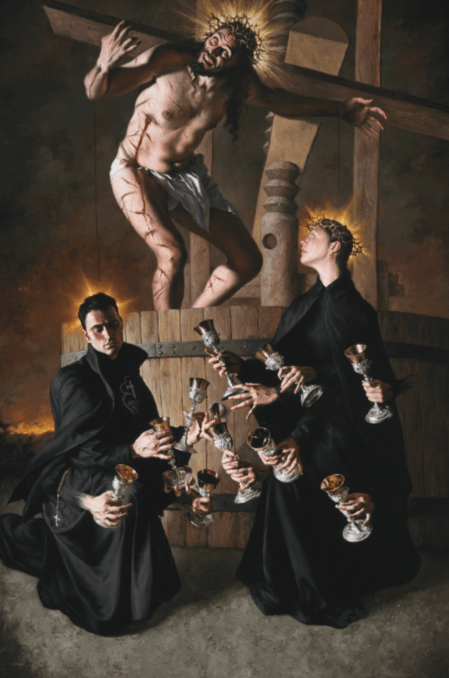
Torculus Christi. Mystic press with St. Gabriele dell’Addolorata and St. Gemma Galgani, Giovanni Gasparro. One of his more overtly weird pieces, but one that is deeply rooted in Catholic mystical and artistic tradition. (Source)

Moving on to a few of Ms. White’s other statements, we come to her distinction between surrealist and sacred art. I happen to be working on a piece right now that will argue that surrealism is an artistic movement that, purged of its original anticlerical animus, can open up plenty of new avenues for a specifically Catholic spiritual art. Indeed, there is already quite a corpus of work that we might reasonably call Catholic surrealism, and I hope to incorporate it into that argument. In the meantime, I refute her argument thus.

Ms. White also takes exception with Gasparro’s very common use of multiplied hands in his paintings. She writes in one of her more patronizing captions,

He seems to be really big into this creepy thing with the multiple floating hands. This is what I would call “schtick” and it is common among highly trained younger artists who think that having a schtick will get them brand-recognition.

This wholesale dismissal is maybe the worst part of the essay. Once again, it evinces a refusal to engage with what Mr. Gasparro has put on the canvas for our consideration, summarizing it tidily in order to condemn it tout court.

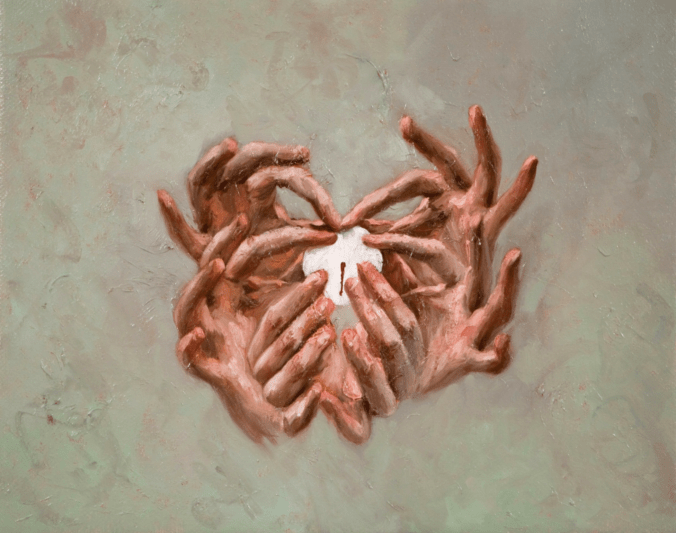
Gasparro’s multiplication of hands – or, in some cases, other body parts – serves two functions in his art. First, it can express the passing of time. In The Miracles of St. Francis of Paola (2015), the doubled set of hands represent discreet acts. Secondly, it can express numerous levels of spiritual meaning that otherwise might be missed through a more conventional image. Manipulating gesture opens up the image. This is particularly true in Gasparro’s Speculum Iustitiate (2014), St. Nicholas of Bari (2016), and his deeply moving portrait of Pius VII, Quum memoranda (Servant of God, Pope Pius VII Chiaramonti) (2014).

Screen Shot 2017-11-11 at 10.28.22 PM.png

The Miracles of St. Francis of Paola, Giovanni Gasparro. (Source)

The doubling invites the viewer to consider each act or spiritual meaning in turn and to ponder how the subject may be acting in each case. The multiplication of hands invites us into a secondary, meditative dimension of the work. As I mentioned at the beginning of this essay, I have found his work a very fruitful spur to precisely this kind of spiritual meditation.

Screen Shot 2017-11-11 at 10.35.58 PM.png

Transunstanziazione, Giovanni Gasparro. This image would be perfectly at home in a church. (Source)

Take one of Gasparro’s finest pieces, Transunstanziazione (2009). I will repeat here what I wrote about it in my Corpus Christi piece:

Three pairs of hands, like the three pairs of wings on the seraphim and cherubim, bear aloft a bleeding host in undifferentiated space. The three sets of hands appear the samethey are, perhaps, the hands of the same priest captured over the lapse of time. This distortion of time and space lends the image a sense of eternity. We are viewing something transcendent. The Eucharist is not just an earthly event. It is also a rite which happens forever in the cosmic liturgy of heaven. And who is the Great High Priest offering that liturgy for us mortals? Who but Christ? In Gasparro’s image, Christ is present as priest and victim.

The three pairs of hands also remind us of the Trinity. When we approach the Eucharist, we truly approach the Triune God. At every Mass, the act of Transubstantiation only happens because of the work of the whole Trinity. Christ offers Himself to the Father in the Holy Spirit, through the hands of His priests and the prayer of His bride, the Church. It is meet and right that we should consider the painting at this point between the Ordinary Form celebrations of Trinity Sunday and Corpus Christi.

The painting has a certain sacramentality, in that, like the liturgy, it captures something of the invisible and manifests it to our earthbound senses. Looking at Gasparro’s painting, we have the sense that we are glimpsing something profound, unsettling, and sacredsomething ordinarily hidden from us. Do we not hear the words of St. Thomas’s Corpus Christi hymn, Lauda Sion?

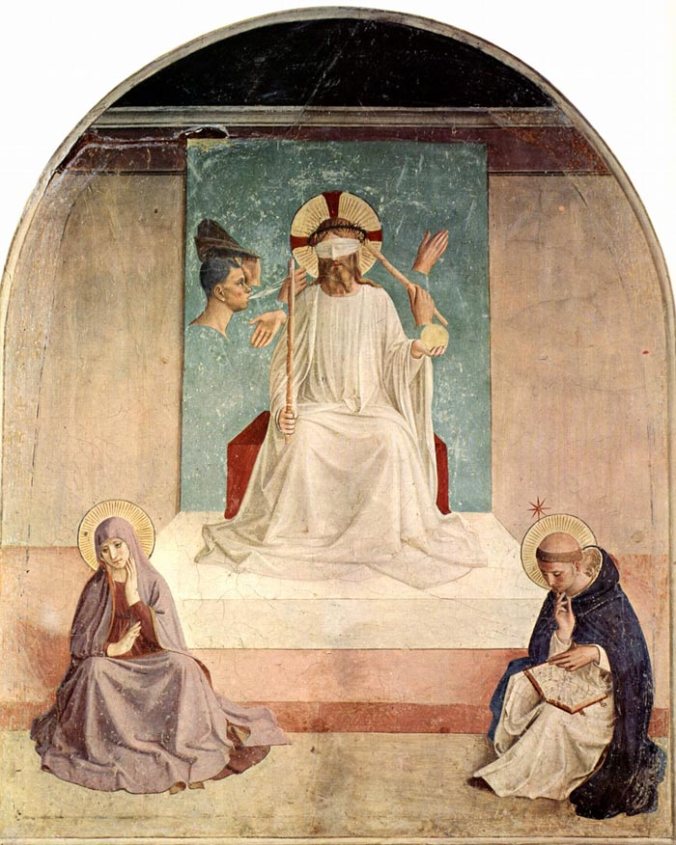
Every time I return to this painting, I find something deeper in it. I’ll add that the multiplication of hands is a trope that exists in the work of that most unimpeachable of Catholic Artists, the Blessed Fra Angelico, who uses it in virtually the same way as Gasparro.

mockingofchrist700

The Mocking of Christ, Fra Angelico. Here he uses hands in the same ways that Gasparro does – to telescope sequential events into one image, to provide an insight into hidden action, and to lead us into meditation. Two of my Facebook friends noticed the formal and spiritual kinship between the two artists. (Source)

Of course, I don’t expect Ms. White or anyone else to have the same approach to every work of art as I do. If she finds Gasparro “creepy,” that is her right. But it is not an argument against Gasparro’s Catholicity. It is a subjective and affective assessment of his art, and thus it lies more in the realm of taste than aesthetic theology. And there’s nothing intrinsically wrong with having and describing a visceral reaction to a work of art. I’m perfectly happy to say de gustibus and leave it at that.

Unfortunately, Ms. White expatiates about what constitutes “sacred art,” which, she claims, is emphatically not what Mr. Gasparro is doing.

She writes,

Knowing nothing about him other than what he paints, I have no idea what this artist intends – and that right there should tell you that he’s NOT doing sacred art – but it seems that in general hyperrealism simply isn’t going to work for devotional art. It’s always going to come across as strange and parodic, because the purpose of devotional painting is not to depict ordinary earthly reality – with all its “warts” – but a supernaturalised, idealised and perfected reality, a redeemed reality, that can only be occasionally glimpsed in this life by seeing the saints.

Sacred art is devotional art. If it isn’t devotional, it’s a parody of the sacred.

Where do I begin?

First of all, it doesn’t matter what the artist intends. We emphatically don’t need to know the artist’s intentions to appreciate what exists in the constructed world of the art-object. It can be helpful, but it really isn’t necessary. “Intention” is one of those terms that is always so heterogeneous and slippery as to be virtually meaningless. Consider the range of “intentions” that might be implicit in any work of art. Most artists of the Renaissance probably intended to produce images that would please their wealthy patrons so that they could keep eating. Moreover, it seems that a great deal of eros generated quite a lot of the Western canon. No doubt at times the souls of the artists were illuminated by the grandeur of their work. But we can’t possibly know to what extent the deeply fallible men (and they were almost all men) intended to invest their work with a consciously spiritual meaning.

What’s more, Ms. White’s dislike for “hyperrealism” as well as “surrealism” leads her to miss the fact that Gasparro’s work strikes an incarnational balance between the two. His subjects are recognizably human, but in the strange art-world he depicts, they are charged with the heavy presence of a mystery far beyond their humanity. They share our condition while pointing towards a world that stands beyond it.

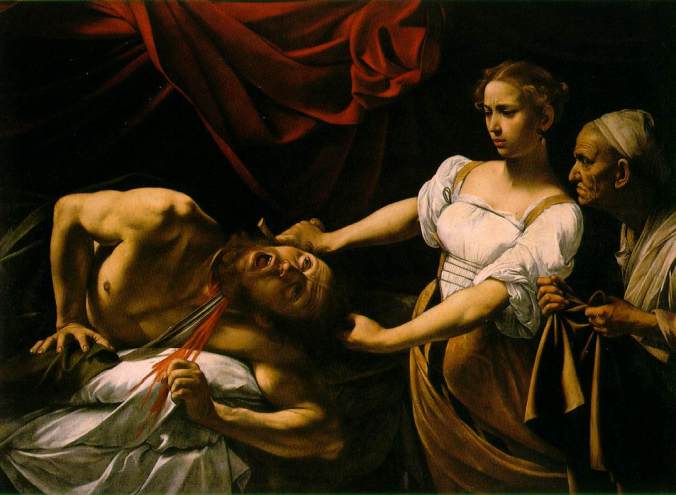
It bears mentioning that her dislike of “ordinary earthly reality – with all its ‘warts'” would necessarily strike Caravaggio from the canon of Catholic masters. Of course, Gasparro resembles Caravaggio more than any other artist. Perhaps she would be glad to see him go. Who else would disappear under Ms. White’s discriminating eye? Rubens and his corpulent maidens? Matthias Grunewald and his unpleasant crucifixions? How about Carlo Crivelli and the sly, malevolent eyes he gives to his saints? What are we to do with the Mannerists and all the distended limbs that litter their canvases? And although he was no Catholic, are we to write off the value of Rembrandt’s religious work because he dares to show the uneven surface of human flesh? Would this not be precisely the least Catholic impulse of all – to fly from the corporeality of our existence, and of the way God uses it?

Judith_Beheading_Holofernes_by_Caravaggio

Judith Beheading Holofernes, Caravaggio. This magnificent portrayal of Judith’s triumph over the wicked general is apparently not “sacred art” under Ms. White’s criteria. (Source)

Ms. White insists on idealism and devotionalism in sacred art. Anything that fails in either of these qualities must be consigned to the great heap of Modernist parody.

Yet both of these are deeply misbegotten efforts. First, when she speaks of “supernaturalised, idealised and perfected reality, a redeemed reality,” she is using the language of iconography. There is indeed much to commend the hallowed iconographic traditions of the Greeks and Slavs (not to mention the Armenians). But Byzantine icons are subject to strict canons, types, and lineages. An iconographer’s process and material are, to a certain extent, determined for him. Longstanding customs surround the production and ritual use of the icons. Part of the reason that theologians can work from the icons as a source in their writing is that those customs safeguard and guarantee the orthodoxy of the images. And the spirituality they have fostered over the centuries is one I admire; it has quickened my own Christian life.

TheMostChasteHeartofStJoseph

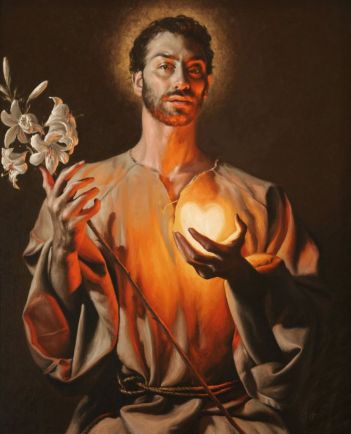
The Most Chaste Heart of St. Joseph, Giovanni Gasparro. Something nigh-unprecedented like this devotional image would be impossible if Western art followed strict canons like the Byzantines do. (Source)

Nevertheless, that’s not what we do in the West. While some artists have managed to give us glimpses of a transcendent realm of sophianic glory (one thinks of the Cusco School and some of those Catholic surrealists I was talking about), they are certainly not obliged to do so by force of tradition. One can lament the fact that we developed a much freer sense of sacred art. I don’t, both because I like statues and because I think the relative freedom of artists has been an enormous boon to civilization and the Church.

We can definitely learn from icons, in part because they remind us of where our own tradition has been. Before this year’s terrible earthquake, Ms. White’s own monastery had a wonderful fresco that captured precisely this quality of enrichment from the East that can and should be productively pursued by Catholic artists. But we ought not make the spiritual vision of the East normative in the West, just as we would decry any effort to impose Western forms on the East. And so I entirely reject her attempt to foist on Western Catholic art the strict confines of the icons.

Secondly, I’m bothered by instrumentalist approaches to art, including an assessment that rests heavily on whether the piece in question is “edifying” or “devotional.” That’s a largely meaningless standard – much more indistinct than the question of whether something is beautiful – since it places the center of the art’s meaning and quality in the affective response of the viewer rather than its own constructed reality and the way that construction interacts with transcendental standards. Namely, beauty.

The idea that specifically sacred art should be a) “devotional,” and b) in a church is a narrow, limiting, overly contextual approach to art. It is only helpful in the strict sense of guidance for church decoration. If Ms. White had limited the purview of her argument to what should count as specifically Liturgical Art, that is, what type of art should be placed in a church for the public veneration and instruction of the faithful in a ritual context, she might have a point. But she doesn’t write within that important qualifier. Instead, she uses Mr. Gasparro’s oeuvre to think about sacred art in general, and arrives at the rather flattening dictum that “Sacred art is devotional art. If it isn’t devotional, it’s a parody of the sacred.”

Screen Shot 2017-11-12 at 1.27.39 AM.png

Blessed Pius IX Pontifex Maximus, Giovanni Gasparro. Because artists who are really modernist heretics are drawn to depicting Pio Nono in prayer. (Source)

The conclusions she draws are totally unworkable as a Catholic approach to aesthetics. Imagine how much poetry and how much music we would have to surrender if we tried to carry the standards of idealism and devotionalism into the other arts in any kind of normative way.

Catholics should be concerned about the quality and orthodoxy of their sacred art. Insofar as Ms. White’s article represents that concern, it is an admirable effort. I’ll add that Ms. White and I probably share a similar exasperation with some of the trends in poor church art and architecture that are so maddening today. Likewise, we no doubt share a desire for a renewal of the Catholic arts. But Ms. White’s artistic philosophy smacks too much of Savonarola. While she is willing to summarily cast Gasparro’s art into the bonfire of the vanities, I contend that he is one of the Church’s most important living artists, alongside Daniel Mitsui, Matthew Alderman, Raúl Berzosa, Ken Woo, Alvin Ong, and others. I also share Rebecca Bratten Weiss’s views on the arts more broadly. We Catholics, and especially those of us who consider ourselves fairly Traditional, are sometimes too “self-referential” (if I may borrow a term favored by the Pope). As Weiss notes:

Toni Morrison, for instance, is a Catholic Nobel laureate whose works are filled with themes of community and redemption. But the Catholic critics who enthuse over Flannery O’Connor and Graham Greene regard Morrison only as a controversial writer on race relations. “She’s not practicing,” they might say, as an excuse to ignore her. And yet, C.S. Lewis, who is revered in their circles, was never even Catholic at all.

Mary Karr – the keynote speaker at the conference – not only is a Catholic convert, but wrote extensively about her conversion, but is deemed by some not to be a “real” Catholic writer, because of her openness about certain sexual issues. And yet Graham Greene was a notorious womanizer who slept with over 300 prostitutes, was condemned by church spokespersons in his time, and closed The End of the Affair with the prayer: “O God, You’ve done enough, You’ve robbed me of enough, I’m too tired and old to learn to love, leave me alone for ever.”

Perhaps the critics who are timid about these powerful Catholic writers working right now in our midst are waiting for someone else to “baptize” them? Perhaps they are waiting for someone else to say “I heard God there” – because they, themselves, have not learned to open the inner chambers of the ear? Because we do not have a robust Catholic arts culture that teaches us to open all the portals for reception, but instead have embraced a misnamed “Benedict Option” which is all about putting up walls and barriers, drawing those lines in the sand.

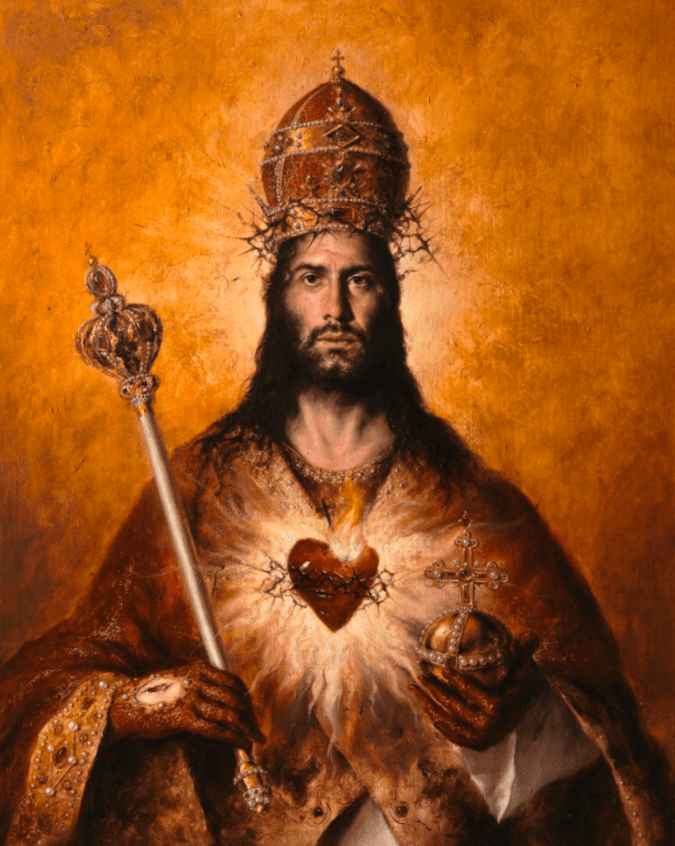
I concur, and would extend the same sort of criticism to Ms. White and those who support her view of the arts. Let us not fall into that old trap of mistaking the modern for Modernism. Christ is King over all. Let Catholic artists explore the plenitude of that Kingship over all, in all, and through all – even if looks strange to our worldly eyes.

Screen Shot 2017-11-11 at 10.00.45 PM

Christ the King, Giovanni Gasparro. May we always serve Him with ardent charity and zeal for the beauty of His house. (Source)

A Poem for the Feast of the Blessed John Duns Scotus

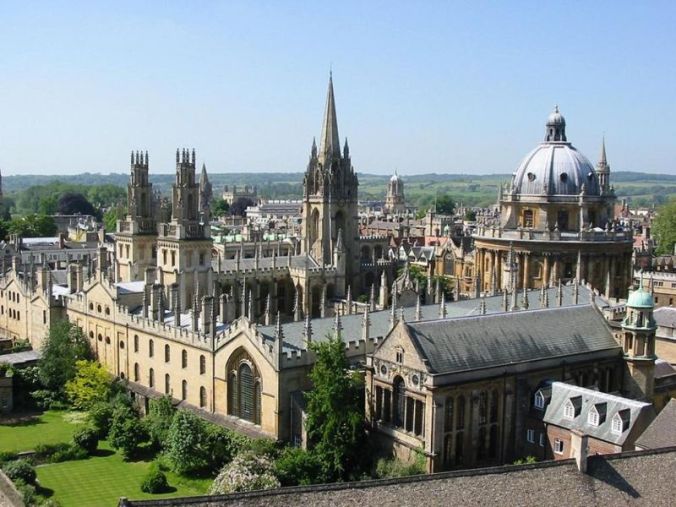
Oxford

Scotus preached and prayed at the University Church of St. Mary the Virgin, now an Anglican parish – there is now a plaque commemorating him on one of the walls. I have heard differing accounts of where his house of Greyfriars would have stood, either near St. Aldate’s or in what is now Brasenose College. (Source)

Duns Scotus’s Oxford

Gerard Manley Hopkins SJ

Towery city and branchy between towers;
Cuckoo-echoing, bell-swarmed, lark-charmed, rook-racked, river-rounded;
The dapple-eared lily below thee; that country and town did
Once encounter in, here coped and posed powers;

Thou hast a base and brackish skirt there, sours
That neighbour-nature thy grey beauty is grounded
Best in; graceless growth, thou hast confounded
Rural rural keeping — folks, flocks, and flowers.

Yet ah! this air I gather and I release
He lived on; these weeds and waters, these walls are what
He haunted who of all men most sways my spirits to peace;

Of realty the rarest-veined unraveller; a not
Rivalled insight, be rival Italy or Greece;
Who fired France for Mary without spot.

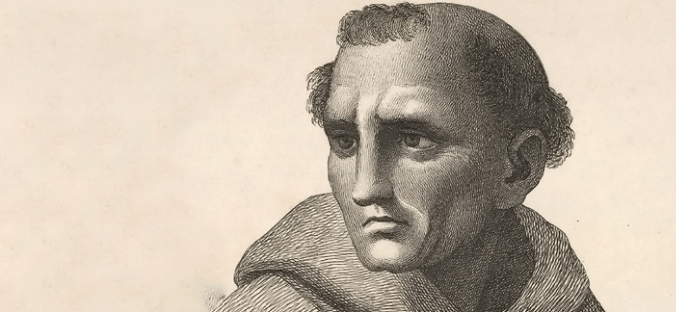
scotuseyes.jpg

Blessed John Duns Scotus, Pray for Us. (Source)